

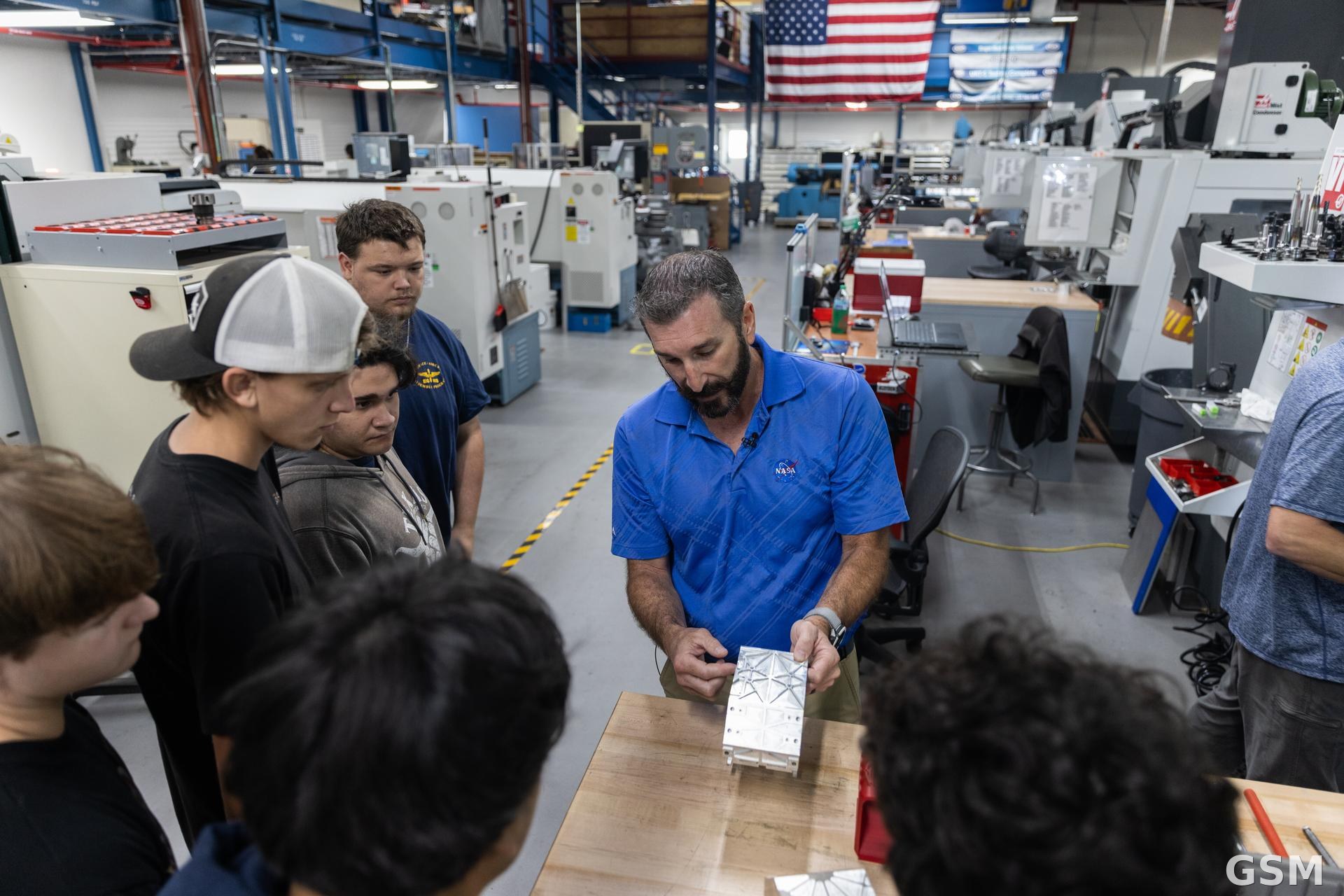
NASA has launched a $1 million student competition inviting high school and post-secondary students across the United States to develop innovative designs and technologies for a future human settlement on the Moon.
Announced on November 8, 2026, during a MAX POWER event at the Kennedy Space Center Visitor Complex in Florida, the Moon Base Student Challenge aims to involve young people in solving real-world engineering and technological problems associated with establishing a permanent human presence on the lunar surface.
The competition is part of NASA’s broader ambition to build a Moon Base near the lunar South Pole, where astronauts will eventually live, work and conduct exploration activities. The agency sees a sustained human presence on the Moon as an important step towards future crewed missions to Mars.
Student teams will be invited to develop innovative solutions across six key areas: power generation and storage, construction, life-support systems, surface mobility, communications networks and astronaut safety.
According to NASA Administrator Jared Isaacman, the challenge is designed to give students an opportunity to contribute to real problems connected with the agency’s future lunar exploration programme, even before completing their education.
The competition will follow multiple phases, allowing participants to develop technical concepts, prepare proposals and present their ideas. NASA says the challenge reflects authentic environmental and mission-design requirements for operating on the lunar surface.
An important feature of the initiative is that students do not need previous specialised engineering or technical experience to participate. The competition is designed to accommodate students from technical, vocational and different academic backgrounds, helping them develop practical skills relevant to careers in the growing space industry.
The competition offers up to $1 million in monetary awards. Prizes will be distributed through finalist awards during the project phase, followed by runner-up and grand-prize awards in the final phase. The highest-scoring teams will also receive an opportunity to present their concepts directly to NASA and space industry leaders.
Registration opened on November 7, 2026, and students must register through NASA’s STEM Gateway by January 25, 2027. The first project submission deadline is February 22, 2027, when teams must submit their concept overview papers. Finalists will be announced on March 11, while final presentations, including recorded pitch videos and slide decks, must be submitted by April 19. NASA plans to announce the winners at a closing symposium on May 6, 2027.
The Office of STEM Engagement developed the competition in collaboration with NASA’s Moon Base Program, while the Institute of Competition Sciences will administer it.
Related: Brussels University Occupation Ends With Police Eviction
NASA officials say the initiative is intended not only to encourage innovation but also to prepare the next generation of scientists, engineers and technical professionals for the challenges of future space exploration. By involving students in the early design stages of lunar infrastructure, the agency hopes to bring fresh perspectives to the technologies that could eventually support humans living beyond Earth.
Competition details, eligibility requirements and official rules are available at NASA Moon Base Student Challenge.
Editorial note: The $1 million figure refers to the total monetary awards available, not a single prize for one winning student or team. The competition is currently aimed at students in US high schools and post-secondary institutions.
