

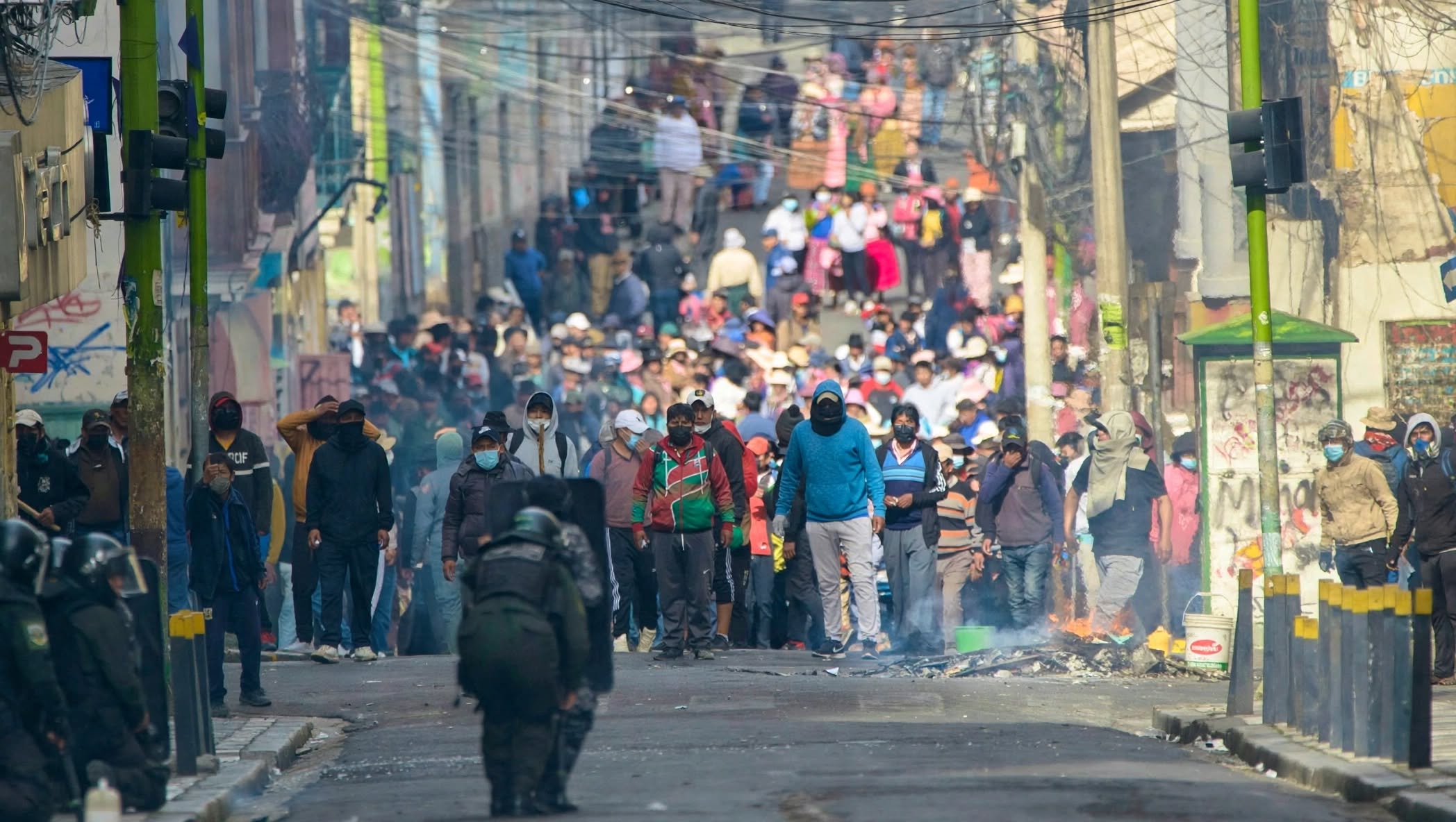
Thousands of teachers and workers have taken to the streets in Bolivia to oppose proposed changes to the country’s public education system, demanding protection of free education, institutional unity and teachers’ employment rights.
The proposed decentralisation of technical and technological education institutions has triggered nationwide protests, with teachers joining thousands of workers in a major demonstration in La Paz on November 27.
The mobilisation was organised by the Confederation of Urban Education Workers of Bolivia (CTEUB) and supported by the Bolivian Workers’ Center (COB), bringing together urban and rural teachers, miners, factory workers and other labour organisations.
Teachers are particularly concerned about a government proposal to transfer the administration of technical and technological institutes to departmental and local authorities. They fear the changes could weaken the unified public education system, affect institutional funding and undermine employment conditions for education professionals.
The CTEUB has called on its 31 affiliated federations to participate in the protests, describing the campaign as a defence of public, unified and free education. The teachers are also demanding fair salaries, job security and respect for professional career regulations.
The dispute has intensified as education workers question the government’s approach to introducing structural changes without sufficient consultation with teachers and their representative organisations.
The government, however, has defended the proposed decentralisation, arguing that it is intended to strengthen education institutions rather than privatise them. Education Minister Érick Sanjinés has indicated that regional consultations and discussions are part of efforts to develop a new education model.
The November 27 demonstration began in El Alto, with protesters marching towards central La Paz. Similar mobilisations took place in other parts of the country, including Cochabamba and Santa Cruz, where teachers, education workers and other social groups joined the campaign.
Although education reform was a central issue, protesters also opposed an increase in diesel prices from 17.95 to 20.57 bolivianos per litre. Labour organisations warned that higher fuel costs could increase household expenses and place additional financial pressure on working families.
Teachers have argued that rising living costs make fair salaries and adequate working conditions even more important for education professionals. They have also warned that the government must address their concerns before proceeding with major changes to the education system.
The protests reflect a wider disagreement over the future governance of Bolivia’s public education institutions, particularly the administration, funding and accessibility of technical and technological education.
Education workers are demanding that the government withdraw its decentralisation proposal and engage directly with teachers’ organisations to develop an education policy that protects public institutions and maintains equal access to education.
Related: Professor Radomir Saicic Enters Serbian Presidential Race
The growing mobilisation puts pressure on the government to address teachers’ concerns and reach an agreement over the proposed reforms, with education workers warning that further demonstrations could follow if their demands remain unanswered.
