

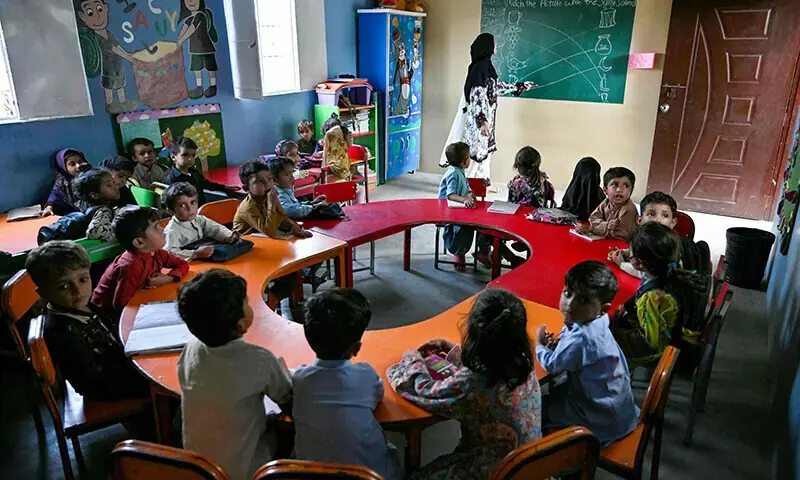
In a significant development for Pakistan’s underfunded education sector, authorities have approved a fresh allocation of $33 million under the ongoing Education Sector Reforms Program, offering renewed momentum to stalled initiatives and critical improvements in public schooling.
The funding, confirmed by a World Bank source cited in the initial report, arrives at a crucial juncture when the reform program had begun to face uncertainty due to earlier financial constraints. Officials believe the new injection will not only stabilize existing efforts but also accelerate progress in key areas that directly impact student outcomes.
According to sources familiar with the plan, the allocation will be strategically utilized to tackle persistent structural challenges within the education system. A major portion is expected to go toward enhancing teacher capacity through modern training programs, addressing long-standing infrastructure gaps such as access to clean drinking water and sanitation in rural schools, and implementing digital monitoring systems designed to track attendance and reduce dropout rates.
Education stakeholders have broadly welcomed the move, describing it as a timely intervention that could help Pakistan stay on track with its international commitments under the Sustainable Development Goals. The reforms are particularly focused on underserved districts where educational indicators, including literacy and enrollment rates, remain significantly below the national average.
A senior official associated with the program expressed cautious optimism, stating that the renewed funding would enable authorities to scale up successful pilot projects while ensuring that resources are tied to measurable performance indicators. The emphasis, the official noted, is shifting from mere financial allocation to tangible improvements in learning outcomes and system efficiency.
Related: Education Fails to Deliver Jobs for Women in Pakistan
The Education Sector Reforms Program continues to serve as a central pillar of the government’s long-term strategy to reduce disparities between elite private institutions and resource-constrained public schools, aiming to create a more equitable and effective education system across the country.