

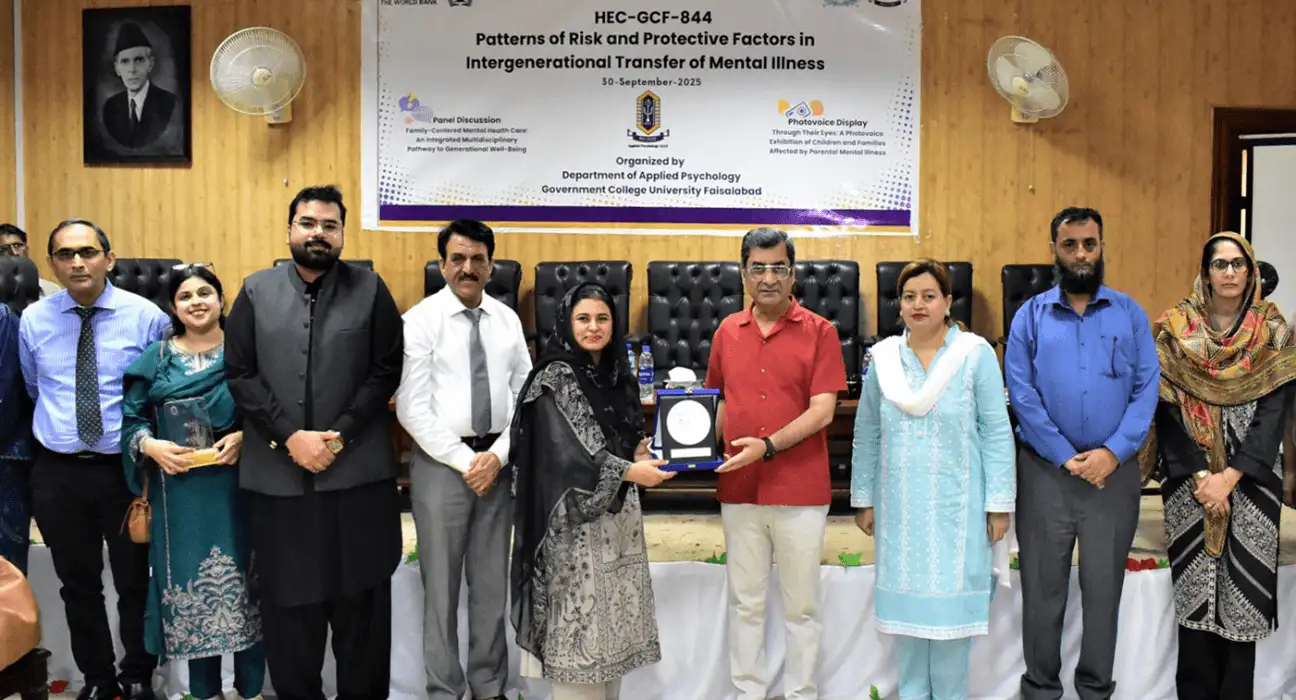
The Department of Psychology at Government College University Faisalabad (GCUF), in collaboration with the Higher Education Commission (HEC) and the World Bank, held the closing ceremony of its project titled “Patterns of Risk and Protective Factors in Integration and Transfer of Mental Illnesses.”
The event brought together leading academics, healthcare professionals, and policymakers to discuss the challenges and opportunities in addressing mental health issues in Pakistan. Vice Chancellor Prof Dr Rauf-i-Azam emphasized the critical role of universities in producing evidence-based research to inform public policy and healthcare practices. He stressed that academic research should serve as a bridge between theory and practical solutions in the mental health sector.
Prof Dr Rabia Khawar, Chairperson of the Department of Psychology, highlighted the importance of focusing on preventive measures and protective factors to reduce the growing burden of mental illness. She said that collaboration with institutions like HEC and the World Bank underscores the recognition of mental health as a national and global priority.
Prof Dr Imtiaz Ahmed Dogar shared clinical perspectives on the alarming rise of depression and anxiety in the community. He urged for early detection, integrated care models, and greater efforts to eliminate stigma around psychological disorders. Dr Bilal Ahmed, Deputy District Health Officer, shed light on the public health dimensions of mental illness and called for stronger cooperation between universities, healthcare departments, and international organizations to build sustainable interventions.
Related: GCUF Hosts Three-Minute Thesis and Research Showcase
The panel discussion examined how social, familial, and institutional dynamics shape both risks and protective mechanisms in mental health. The ceremony concluded with a collective call to strengthen research-driven policies, raise awareness, and promote community-based support systems. Faculty, students, and partner institutions were lauded for their contributions to the project’s success.