

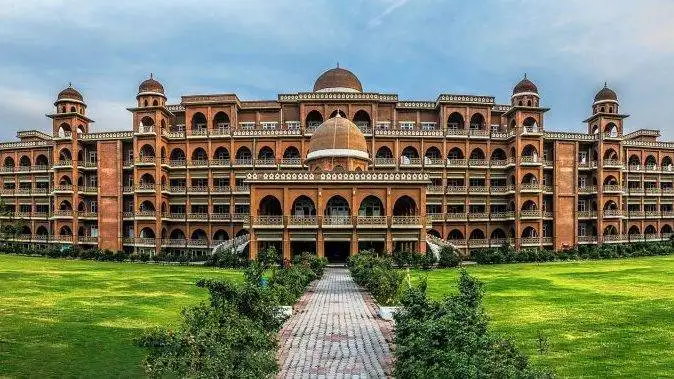
The University of Peshawar (UoP) has announced the closure of nine academic departments ahead of the Fall 2025 semester after admission numbers for their Bachelor of Studies (BS) programmes fell drastically below the required minimum.
According to an official notification issued by the university, the decision affects BS programmes in Development Studies, Geography, Geology, History, Social Anthropology, Statistics, Logistics and Supply Chain Analytics, Human Development and Family Studies, and Home Economics. The move comes as some programmes received only a handful of applications—BS Human Development and Family Studies had just one applicant, while Development Studies and Home Economics each attracted two. Even Geology, which performed relatively better, enrolled just 14 students, still short of the university’s minimum requirement of 15 per programme.
The university administration has advised affected students to contact the Director of Admissions for transfers to alternate academic programmes to protect their academic future.
Sources within the institution say the closures reflect a broader crisis facing the university, with several other departments, including Mathematics, Chemistry, Journalism, and Urdu, also experiencing low enrollments, though not below the cutoff point.
A UoP spokesperson attributed the decline to a shift in student preferences toward market-driven disciplines offering better job prospects, such as Computer Science and Allied Health Sciences, while traditional subjects are seen as offering limited career opportunities.
Academician Yousaf Ali said the problem runs deeper, pointing to systemic flaws in the higher education framework. He explained that the introduction of BS programmes at both university and college levels was poorly planned. Colleges now offer similar degrees at a fraction of the cost—around Rs 14,000 per year compared to UoP’s Rs 150,000—driving many students away from the university.
He further noted that UoP’s ongoing financial difficulties have forced repeated fee hikes, adding to the affordability problem. Additionally, the rapid increase in universities and colleges across Khyber Pakhtunkhwa has fragmented the student population and intensified competition.
Ali argued that the affected departments have “lost relevance in the changing environment,” failing to modernize their curricula or align with market trends. He urged the government to review the structure of the BS programme, warning that higher education institutions across the region are struggling with similar issues.
Related: Clash at Peshawar University: Police and Protesters Injured
The University of Peshawar’s decision marks a significant moment in Pakistan’s education sector, reflecting the growing divide between traditional academia and the evolving demands of students and employers in a competitive, market-oriented era.