
Pakistan’s education system has reached a historic turning point, with total education spending rising to Rs. 5.03 trillion—but now more than half is paid by families rather than the state, according to a new report.
Data from the Institute of Social and Policy Sciences (I-SAPS) reveals that household spending on education has surged to Rs. 2.8 trillion, surpassing the government’s contribution of Rs. 2.23 trillion. This marks the first time in Pakistan’s history that private spending exceeds public investment in education.
The shift raises urgent concerns about equity and access, especially with an estimated 25 million children still out of school. Families now bear 56% of total education costs, including private school fees (Rs. 1.31 trillion), shadow education and tuition (Rs. 613 billion), and other out-of-pocket expenses like books and uniforms.
“Families are financing education at a scale that raises fundamental equity concerns,” said Dr Salman Humayun, Executive Director of I-SAPS. He warned that the financial burden disproportionately falls on poorer households, deepening social exclusion.
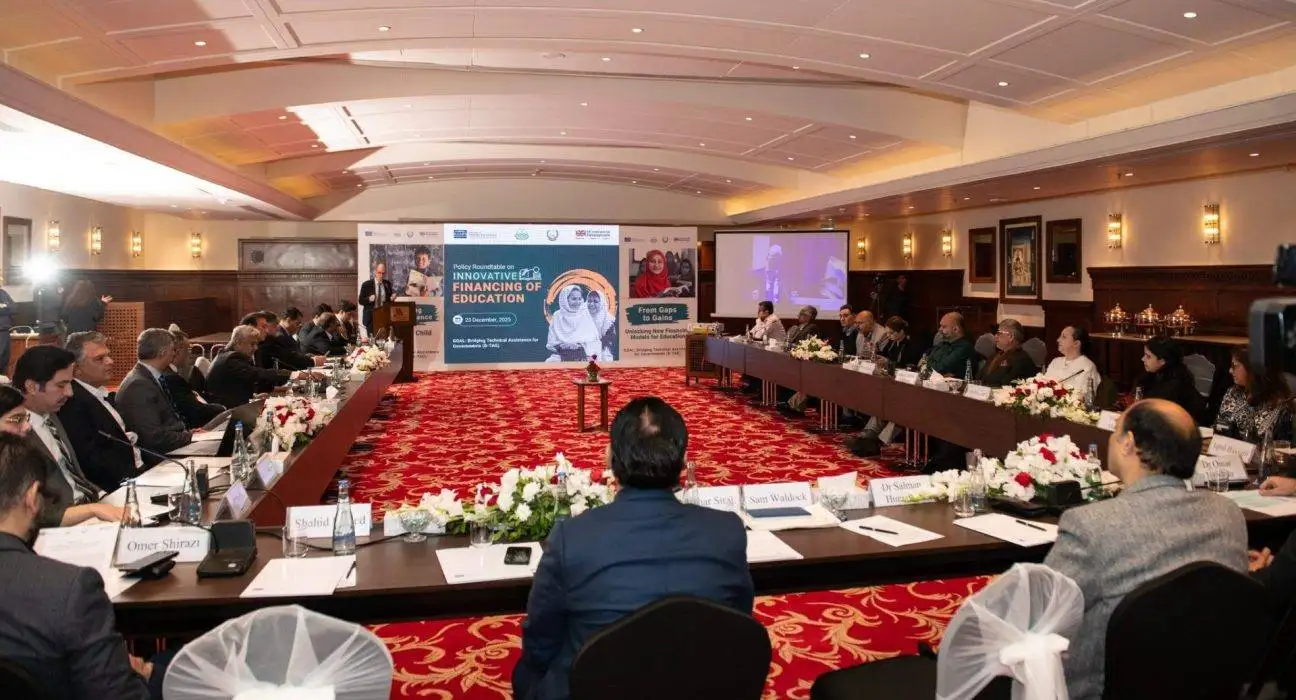
Experts at the report’s launch attributed the trend to growing dissatisfaction with public schools. World Bank Senior Education Specialist Izzah Farrukh noted that the rise in private schooling reflects families “opting out” of a system perceived as unresponsive.
Speakers called for reforms focused on outcomes, stronger governance, and better use of existing resources. Ahmad Ali, I-SAPS Director Programmes, described rising private spending as a “policy signal” to strengthen public education and protect access for girls and marginalised communities.
Related: 136 Tech Labs Transform Public Education in Islamabad
Participants agreed that Pakistan stands at a critical juncture: upcoming budget decisions will determine whether increased spending improves learning for all, or deepens inequality.