

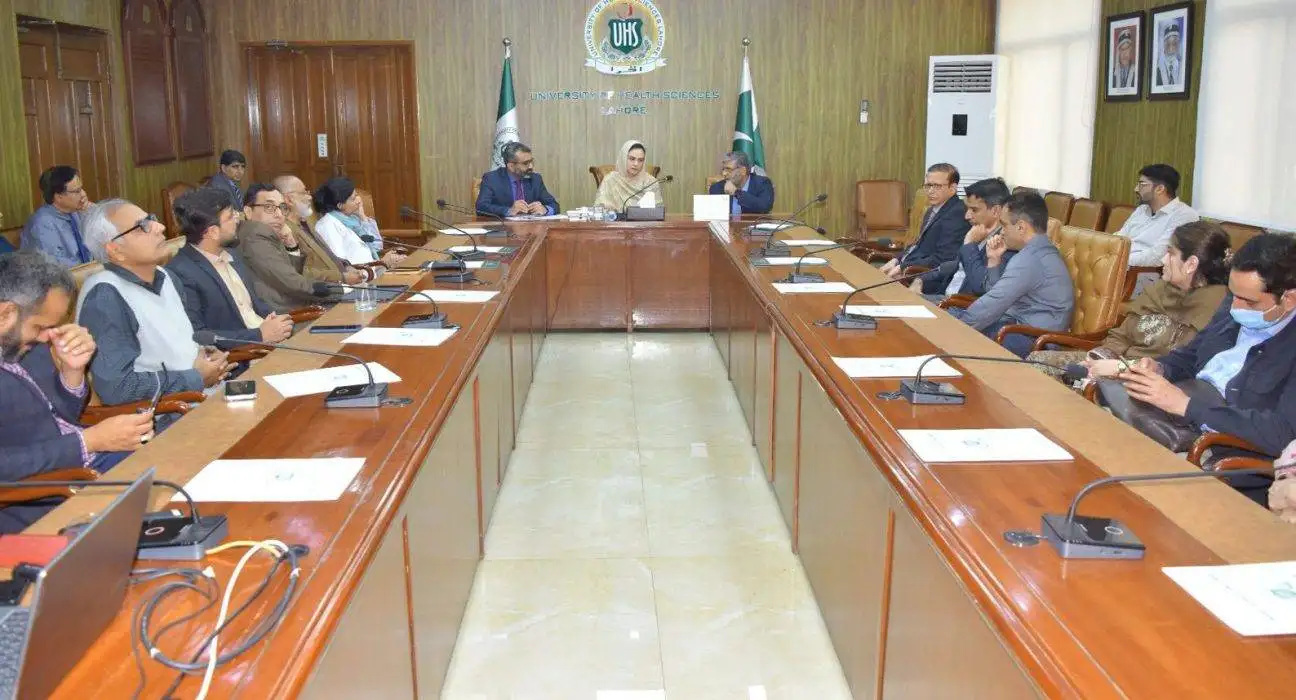
The University of Health Sciences (UHS) Lahore has urged comprehensive reforms in internal medicine education after identifying significant gaps in clinical training and diagnostic practices during a key academic session held on February 16.
The second session of the Discipline Specific Faculty Council (DSFC) for Internal Medicine, academically hosted by the Services Institute of Medical Sciences, brought together senior faculty members to review academic standards and assess the effectiveness of current training frameworks.
Prominent participants, including Prof Dr Tahir Siddique, Dr Asma Kamal, Dr Javaid Iqbal and Dr Kiffayat Ullah Malik, deliberated on pressing issues related to clinical competence, disease classification and postgraduate preparedness. The session highlighted inconsistencies in diagnostic approaches, particularly in nephrology, where chronic kidney disease (CKD) is often misclassified.
Faculty members emphasised that CKD should be considered an outcome rather than a primary diagnosis, referencing a case where IgA nephropathy had been incorrectly labelled as CKD. Experts stressed the importance of early detection, identifying underlying causes and adopting a multidisciplinary approach to improve patient outcomes and diagnostic accuracy.
The council also reviewed a preparatory programme designed for Intermediate Module (IMM) graduates applying for MD Internal Medicine. Participants underlined the need to strengthen clinical reasoning, case-based learning and evidence-based decision-making to ensure readiness for advanced training.
Concerns were also raised regarding the final year MBBS curriculum, with faculty pointing to limited clinical rotations in general medicine and inadequate departmental exposure at some teaching hospitals. To address these gaps, the council formed a review committee tasked with proposing curriculum revisions.
Pro Vice Chancellor Prof Nadia Naseem urged faculty members to actively contribute to upcoming alumni conference workshops aimed at enhancing academic collaboration and training quality.
Related: UHS Launches Modern MBBS and BDS Curricula
The session concluded with consensus on drafting formal recommendations for curriculum reforms and introducing standardised protocols for CKD management, signalling a broader effort to improve the quality and consistency of medical education in the country.