

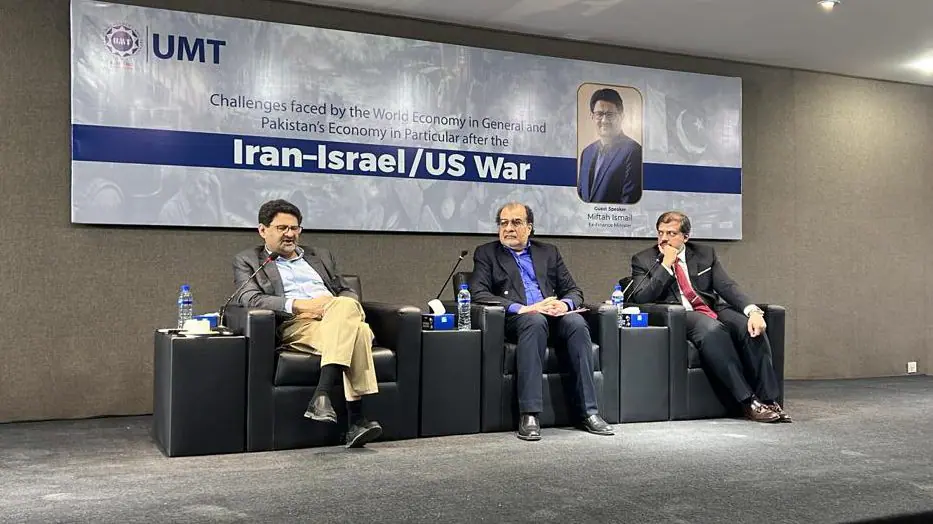
Lahore witnessed a thought-provoking academic gathering as University of Management and Technology (UMT) hosted a seminar examining the far-reaching economic consequences of escalating tensions involving Iran, Israel, and the United States. Organized by the Hassan Murad School of Management, the event brought together students, faculty, and policy observers to engage in a timely discussion on global and regional economic challenges.
The seminar featured former Finance Minister Miftah Ismail as the chief guest, who underscored the growing impact of geopolitical instability on the global economy. He emphasized that the ongoing economic strain is not confined to the Middle East but is also significantly affecting Pakistan, calling for swift and effective policymaking to navigate the current challenges.
The event was attended by Vice Rector Dr Ejaz Ullah Cheema and Dean Dr Naveed Yazdani, alongside a large number of students and faculty members. Discussions centered on the evolving geopolitical landscape, global market disruptions, and Pakistan’s economic positioning in a volatile international environment.
Addressing the audience, Miftah Ismail highlighted Pakistan’s constructive diplomatic role in easing regional tensions, describing it as a positive development on the global stage. He also directed a strong message to the youth, stressing that the country’s future depends on their dedication, discipline, and commitment to excellence.
An interactive question-and-answer session allowed students to engage directly with the former finance minister, raising concerns about economic trends and policy responses. Ismail responded with practical insights into the complexities of the global economy and the potential implications for Pakistan.
Related: UMT Wins Major HEC Grant to Advance AI in Cancer Diagnosis
The seminar concluded with Vice Rector Dr Ejaz Ullah Cheema presenting a souvenir to the chief guest, marking the end of an insightful session that reinforced the importance of informed dialogue in addressing pressing economic issues.