

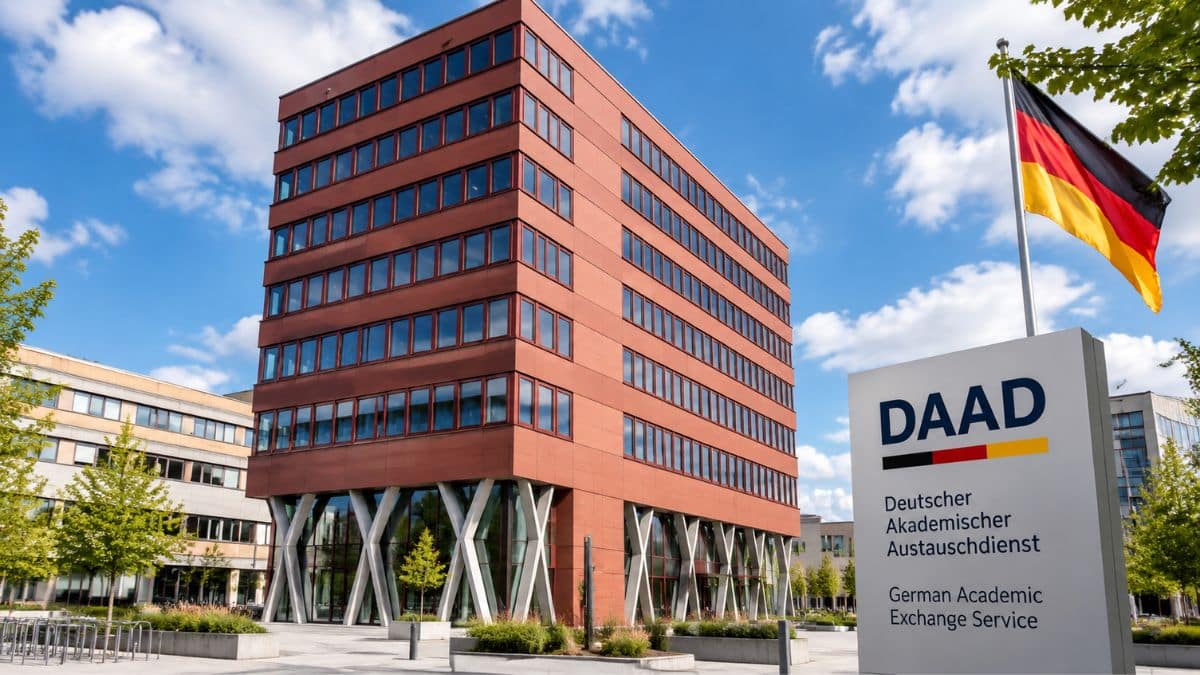
International students and researchers looking for opportunities to pursue doctoral research in Germany can explore the DAAD Research Grants (PhD Level) for international students. Offered through the German Academic Exchange Service (DAAD), these grants support qualified international doctoral candidates who want to conduct research at German universities or recognized research institutions.
The DAAD Research Grants (PhD Level) for international students can be particularly useful for students whose doctoral research requires access to German academic institutions, specialized facilities, researchers, libraries or other resources. Depending on the specific DAAD programme and the applicant’s circumstances, funding can support a research stay in Germany or a complete doctoral programme. In this article, we will explore all the details about the DAAD Research Grants (PhD Level) for International Students.
What Are DAAD Research Grants?
The DAAD Research Grants (PhD Level) for international students are designed to provide financial support for highly qualified doctoral researchers. DAAD offers different research-related funding routes, so applicants need to identify the programme that matches their doctoral situation and country-specific eligibility requirements. The funding may support an individual research project supervised by a university professor or participation in a structured doctoral programme. The current DAAD scholarship database also states that research phases outside Germany can sometimes be supported when they are essential to completing the doctorate.
For international students, the DAAD Research Grants (PhD Level) for international students can therefore provide an opportunity to combine doctoral research with experience in Germany’s academic and research environment.
Who Can Apply?
Eligibility depends on the specific DAAD programme, the applicant’s country of residence or nationality, and the type of doctoral research being proposed. For the current DAAD Doctoral Programmes in Germany scholarship, applicants generally need above-average qualifications and must have completed a Master’s degree or Diplom, or in exceptional cases a Bachelor’s degree, by the beginning of the funding period.
For research grants in Germany aimed at doctoral students, DAAD states that the start of the doctorate should generally not have been more than three years before the application deadline. Applicants who have already been resident in Germany for more than 15 months at the relevant deadline are not eligible for that particular research-grant programme. Therefore, students considering DAAD Research Grants (PhD Level) for international students should check the exact requirements for their country and programme before preparing an application.
What Fields of Study Are Eligible?
The DAAD Research Grants (PhD Level) for international students can be relevant to applicants from a wide range of academic disciplines. DAAD’s scholarship opportunities cover numerous fields, including natural sciences, engineering, social sciences, humanities, economics, law, arts and other areas.
However, language requirements can vary according to the subject and research plan. DAAD notes that applicants in fields such as arts, social sciences and law may generally need good German-language skills, while English-language proficiency may be accepted in natural sciences and engineering when English is the working language at the host institution. Applicants should therefore determine the language requirements of their proposed research project before applying.
What Funding Does the Programme Provide?
One of the major attractions of the DAAD Research Grants (PhD Level) for international students is the financial support available to successful applicants. For the current DAAD Doctoral Programmes in Germany scholarship, the listed benefits include a monthly scholarship payment of €1,400, payments toward health, accident and personal liability insurance, a travel allowance and an annual research allowance of €460. Additional benefits, such as a possible rent subsidy, may also be available under certain conditions.
The exact funding package can vary between DAAD programmes. This is why applicants should not assume that every DAAD Research Grants (PhD Level) for international students opportunity has identical benefits.
How Long Is the Funding?
The duration depends on the specific scholarship programme and the applicant’s doctoral plan. For the current Doctoral Programmes in Germany scholarship, funding can be provided for a maximum of four years. Grants are initially awarded for up to three years, while an extension for a possible fourth year can be requested if the academic progress indicates that the doctorate can be successfully completed within a reasonable period.
Other DAAD research-grant programmes may provide shorter research stays in Germany. Consequently, students searching for DAAD Research Grants (PhD Level) for international students should carefully distinguish between funding for a full doctorate and funding for a research period within an existing doctorate.
What Documents Are Required?
Preparing a strong application is an important part of applying for the DAAD Research Grants (PhD Level) for international students. Depending on the specific programme, applicants may be asked to submit documents such as:
- Curriculum vitae
- Academic transcripts and degree certificates
- Research proposal
- Research or study plan
- Motivation letter
- Proof of admission or enrolment in doctoral studies
- Confirmation from the German academic host
- Evidence of language proficiency where required
- Relevant publications, where applicable
For one current DAAD research-grant programme, the application requirements include a detailed research proposal, a timetable, proof of doctoral admission or enrolment and confirmation from the German academic host. The research proposal is especially important because the selection process considers the quality and feasibility of the proposed research.
How to Apply for DAAD Research Grants?
Students interested in DAAD Research Grants (PhD Level) for international students generally begin by finding the appropriate scholarship through the DAAD scholarship database. Applicants should carefully check the programme’s eligibility criteria, country-specific application instructions, funding period and deadline. They then need to register through the DAAD application portal and upload the required documents.
An important part of the process is identifying and communicating with a suitable academic supervisor or host institution in Germany. For research-based applications, the proposed project should be discussed with the German academic adviser, and the host confirmation should correspond to the research project.
What Are the Application Deadlines?
There is no single universal deadline for every DAAD Research Grants (PhD Level) for international students programme. DAAD explains that deadlines can vary according to the scholarship programme and applicant’s country. For example, the current Research Grants in Germany listing provides application dates of 31 July 2026 and 16 November 2026 for particular funding rounds, with selection taking place later in the year or in early 2027.
Students should therefore verify the deadline displayed for their specific programme rather than relying on a general DAAD deadline.
Why Consider DAAD Research Grants?
The DAAD Research Grants (PhD Level) for international students can offer more than financial assistance. Conducting doctoral research in Germany can provide international academic exposure, opportunities to work with researchers and access to university or research-institute resources. For students pursuing internationally relevant research careers, spending part of their doctoral journey in Germany may also provide experience in a different academic environment.
However, applicants should remember that DAAD scholarships are competitive. Academic performance, the quality and feasibility of the research proposal, motivation, the suitability of the German host institution and other selection factors can influence the outcome.
Other than DAAD Research Grants (PhD Level), you can also explore DAAD Helmut Schmidt Programme 2026
Thus, the DAAD Research Grants (PhD Level) for international students provide opportunities for qualified doctoral researchers to undertake research in Germany or, through specific programmes, complete a doctoral degree at a German institution. With funding that can include a monthly stipend, insurance-related support, travel assistance and research allowances, the DAAD Research Grants (PhD Level) for international students can help reduce some of the financial challenges associated with international doctoral study. Students should begin preparing early, particularly because finding a suitable academic supervisor and developing a convincing research proposal can take time. Most importantly, applicants should check the latest DAAD scholarship database and country-specific requirements before submitting an application.
FAQs
What are DAAD Research Grants?
The DAAD Research Grants (PhD Level) for international students are scholarship opportunities designed to support qualified international doctoral candidates undertaking research in Germany. Depending on the specific programme, funding may support a research stay or a full doctoral programme.
How much funding can students receive?
The amount depends on the specific DAAD programme. For the current Doctoral Programmes in Germany scholarship, successful scholars receive €1,400 per month, along with additional benefits including insurance-related payments, a travel allowance and an annual research allowance of €460.
Do I need a research proposal to apply?
Yes. A detailed and well-planned research proposal is an important part of many DAAD Research Grants (PhD Level) for international students applications. Applicants may also need confirmation from a German academic host or supervisor, depending on the programme.
