

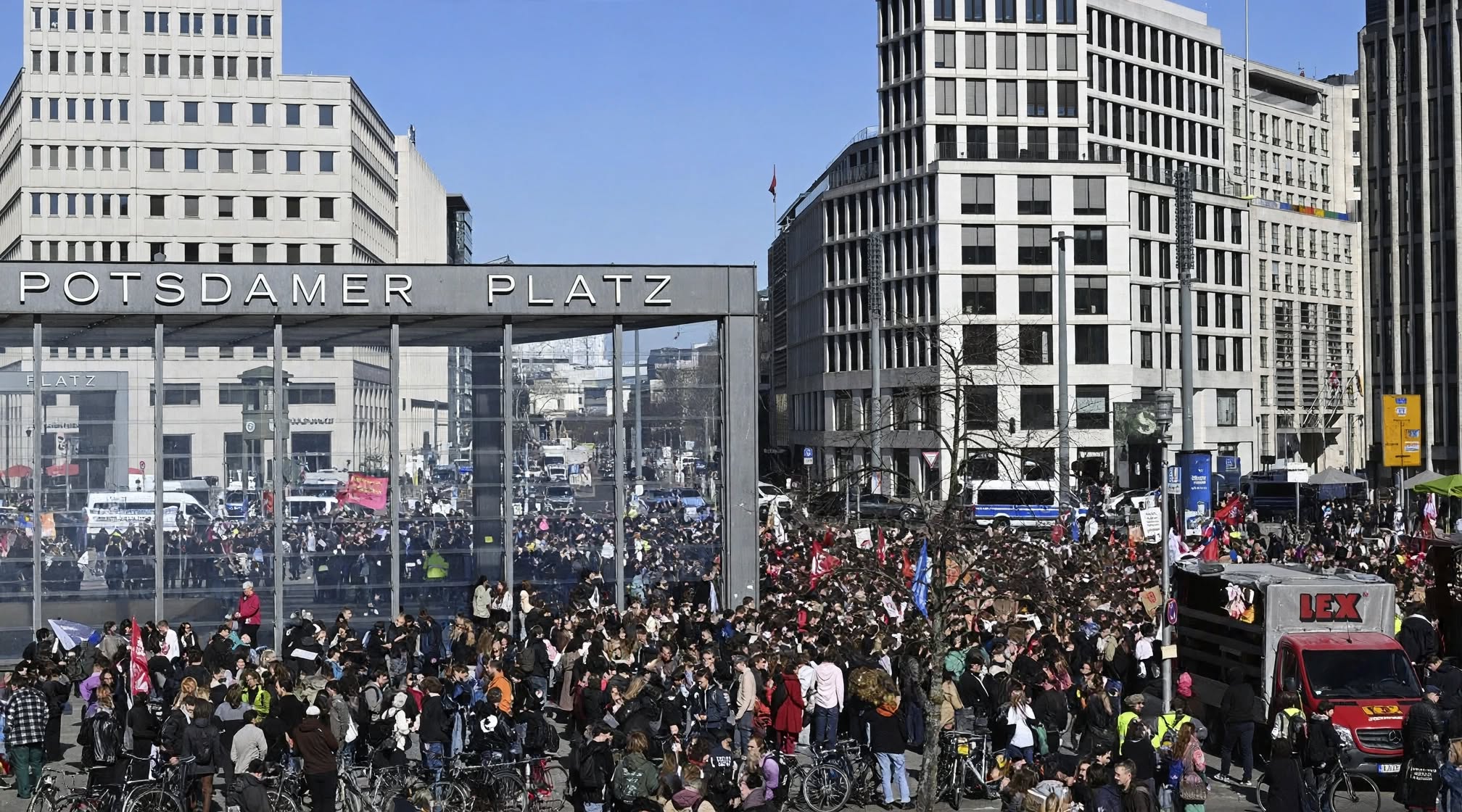
A newly formed German youth initiative has called for nationwide protests on October 31, mobilising young people in 21 cities over concerns about education funding, rising living costs, social services and plans for compulsory military service.
The initiative, “Gen Z steht auf,” has announced demonstrations in cities including Berlin, Hamburg, Munich, Frankfurt and Cologne. According to the organisers, protests will begin at 2pm and are intended to highlight demands for greater investment in education, healthcare, social security and affordable living, while opposing military conscription and austerity measures that they say disproportionately affect younger generations.
The movement says young people should have a stronger voice in decisions affecting their future. Its organisers have stressed that the demonstrations are intended to remain peaceful and have publicly distanced themselves from violence.
The planned protests are also drawing increased attention from German security authorities. Berlin police have warned that radical groups could attempt to exploit the demonstrations for their own purposes, particularly because the protests coincide with Halloween. Police officials said they would closely monitor the gatherings while allowing legitimate peaceful demonstrations to take place.
German police unions have also expressed concern about possible clashes or disorder, pointing to recent unrest linked to youth demonstrations elsewhere in Europe. Authorities are preparing for a substantial security operation, while emphasising that young people should be able to exercise their right to peaceful protest.
The planned mobilisation follows growing student and youth activism across Europe, particularly in France, where large-scale demonstrations over education, social conditions and compulsory military service have attracted significant attention among young people in neighbouring countries.
In Germany, concerns about underfunded and ageing educational infrastructure are adding to the debate. Students at Berlin’s Technical University, for example, have highlighted closed buildings, outdated facilities and a lack of investment, with the university facing significant renovation needs.
Related: Education Unions Unite in Bulgaria Over Shortages and Funding
The October 31 demonstrations could therefore become an important test of the strength of Germany’s emerging youth movement and its ability to turn concerns over education, economic pressures and military policy into a nationwide political campaign. Organisers have described October 31 as only the beginning of their mobilisation.
