

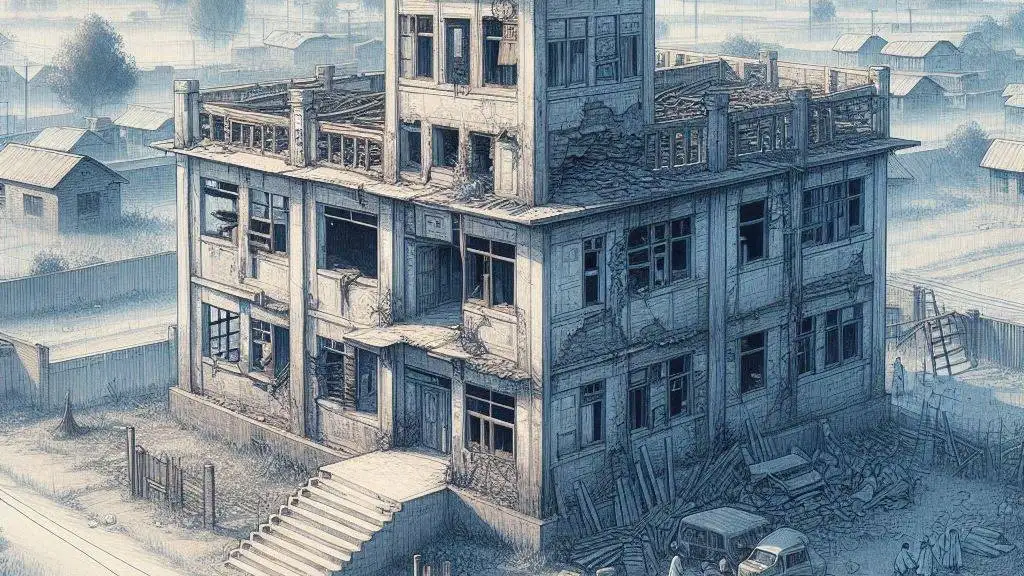
The Government Girls High School in Kot Ishaq, located in the Gujranwala district, has been waiting for the start of classes for over five years, despite the substantial financial investment in its construction. With an allocation of 40 million rupees, the school building was completed and handed over to the Department of School Education (SED) five years ago, intended to cater to the educational needs of a population of 100,000. However, despite this significant investment, the school remains unused, and the teaching process has not commenced. The building stands empty, growing increasingly dilapidated, and is often described as a “ghost building” by the local community, as no educational activities take place inside.
The failure to initiate classes has caused a major disruption in the education of local girls. With no government-run school available, students from Kot Ishaq have been forced to travel several kilometers to attend private institutions, which imposes financial and logistical burdens on their families. Many of these families, already struggling with economic constraints, are unable to afford the cost of private education, leaving young girls deprived of their right to quality education in their own neighborhood. This has not only led to a decline in the school-going rate but has also raised concerns about the increasing disparity in educational access between urban and rural areas.
The situation has sparked outrage among local residents and activists, who are demanding immediate action from the Department of Education. They argue that the investment of 40 million rupees in the school building is a wasted resource if it remains underutilized. Parents and community leaders are calling for the school to be opened and operationalized without any further delay, highlighting the urgent need for government attention to resolve the issue. The school’s prolonged closure has become a symbol of inefficiency and neglect within the education sector, underscoring the wider challenges faced by rural areas in Pakistan in terms of equitable access to quality education.