

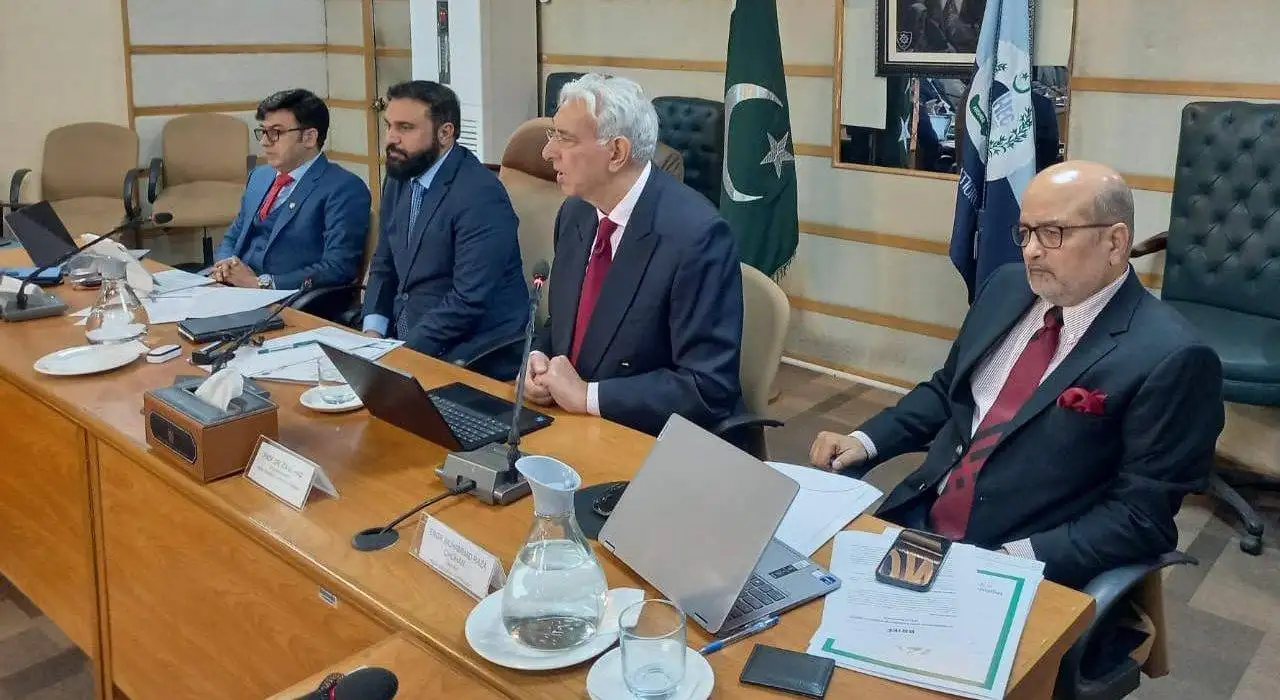
The Higher Education Commission (HEC) on Tuesday hosted a high-level meeting between a delegation from Germany’s Forschungszentrum Jülich (FZJ) and representatives of leading Pakistani universities to explore long-term and transformative research partnerships. The session focused on strengthening academic collaboration in priority areas including neuroscience, energy, information technology, and health research.
Chaired by Executive Director HEC Dr Zia ul Haq, the meeting aimed to identify concrete and actionable avenues for academic exchange, joint research, and institutional cooperation. Dr Zia emphasized the importance of international partnerships in elevating Pakistan’s research profile and aligning national priorities with global scientific advancements.
During the session, Dr Nadeem Joni Shah, Director at Forschungszentrum Jülich, presented an overview of the center’s cutting-edge research and technological capabilities. He highlighted opportunities available under the European Union’s Horizon 2020 framework, noting its potential to support collaborative research projects addressing major societal and scientific challenges.
Member Human Resource Development (HRD) HEC, Engr Muhammad Raza Chohan, reaffirmed the commission’s commitment to facilitating such partnerships. He underscored the role of innovative collaboration models, including Transnational Education, in promoting faculty exchange, joint supervision, and shared research outcomes.
Adding a policy perspective, Member Science and Technology at the Planning Commission, Dr Najeebullah Marwat, discussed the government’s strategic shift toward investing in advanced technological infrastructure. He noted that internationalizing Pakistan’s research ecosystem is a key priority to ensure competitiveness, innovation, and sustainable development.
Related: HEC Conducts Pilot Quality Review at SBBWU Peshawar
Representatives from Pakistani universities expressed strong interest in collaborating with Forschungszentrum Jülich, welcoming the prospects of joint academic programs, research initiatives, and capacity-building efforts. The meeting concluded with a shared resolve to translate discussions into structured partnerships that can contribute meaningfully to scientific progress and national development.