

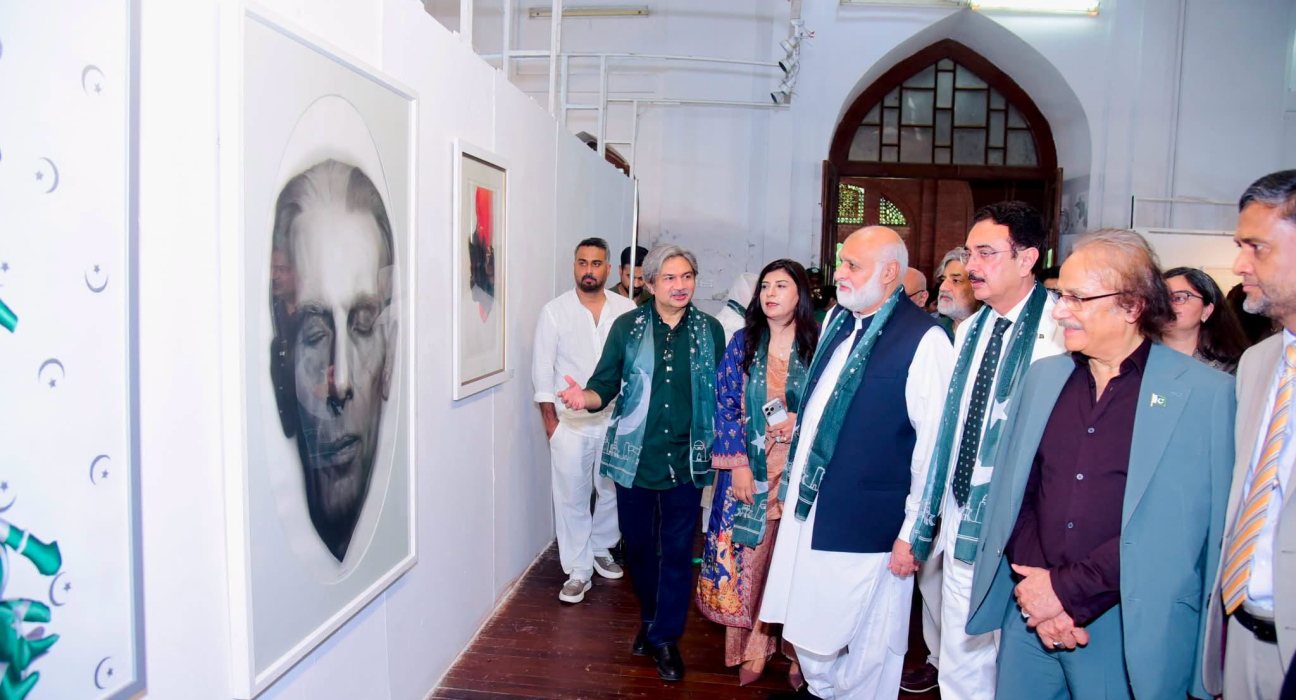
Higher Education Commission (HEC) Chairman Prof Dr Niaz Ahmed Akhtar has hailed the first-ever joint art exhibition by the Punjab University College of Art and Design and the National College of Arts (NCA), describing it as an important milestone in bringing two of Pakistan’s historic academic and artistic institutions together on a shared creative platform.
Titled “Ranaai-e-Khayal-o-Khat,” the exhibition brings together more than 300 works of art by students and young artists from both institutions. The HEC Chairman said the event provided an impressive platform for showcasing the creativity, imagination, artistic maturity and confidence of Pakistan’s emerging artists.
In a statement shared following the exhibition, the HEC Chairman said he had expressed the idea of bringing NCA and Punjab University College of Art and Design together on a common creative platform around three months ago. He appreciated NCA Vice Chancellor Professor Dr Murtaza Jafri for taking the initiative forward and turning the concept into a major event within a short period.
Prof Dr Niaz Akhtar also acknowledged the institutional support extended by Punjab University Vice Chancellor Professor Dr Muhammad Ali, saying the cooperation between the two universities demonstrated an exemplary model of inter-university collaboration.
The Chairman said the artwork displayed at the exhibition reflected not only technical and artistic skills but also the ability of young artists to interpret society, culture and a rapidly changing world through creative expression.
He expressed confidence in the potential of Pakistani youth, saying the country’s young people possess talent and creative abilities comparable to their peers anywhere in the world. He stressed that they need greater access to opportunities, mentorship and platforms through which they can showcase their abilities nationally and internationally.
The HEC Chairman also highlighted the historic significance of both Punjab University and NCA, describing them as custodians of Pakistan’s intellectual, artistic and cultural heritage. He noted that the two institutions have produced generations of artists, educators, designers and creative professionals who have contributed to shaping and promoting Pakistan’s cultural identity.
According to him, the significance of the joint exhibition extends beyond the artworks on display, as it connects the artistic traditions and institutional heritage of the two universities with the creative energy of a new generation.
He said “Ranaai-e-Khayal-o-Khat” should be viewed not simply as an art exhibition but as the beginning of a potentially broader partnership between the two institutions.
The Chairman expressed the hope that the collaboration would continue beyond the exhibition through joint teaching and research initiatives, student and faculty exchanges, collaborative creative projects and efforts to promote Pakistani art and culture internationally.
He further emphasized that universities have a responsibility beyond awarding degrees, arguing that higher education institutions must identify, develop and showcase students’ creativity, innovation, critical thinking and talent.
He said artists play an important role in representing a society’s culture, history, emotions and collective consciousness, and called for greater efforts to introduce the work of young Pakistani artists to national and international audiences.
The HEC Chairman congratulated Professor Dr Murtaza Jafri, Punjab University Vice Chancellor Professor Dr Muhammad Ali, Principal College of Art and Design Dr Samina Naseem, the faculties, students, alumni and all those involved in organizing the exhibition.
He said Pakistan’s historic institutions and the creative potential of its young people represent valuable national assets, stressing the need to combine pride in the country’s heritage with greater confidence in its younger generation.
Related: HEC Chairman Visits Fudan University to Boost Research and Innovation
The initiative marks an important effort to connect Pakistan’s established academic and artistic traditions with emerging creative talent while opening the door to deeper institutional collaboration in the future.
