

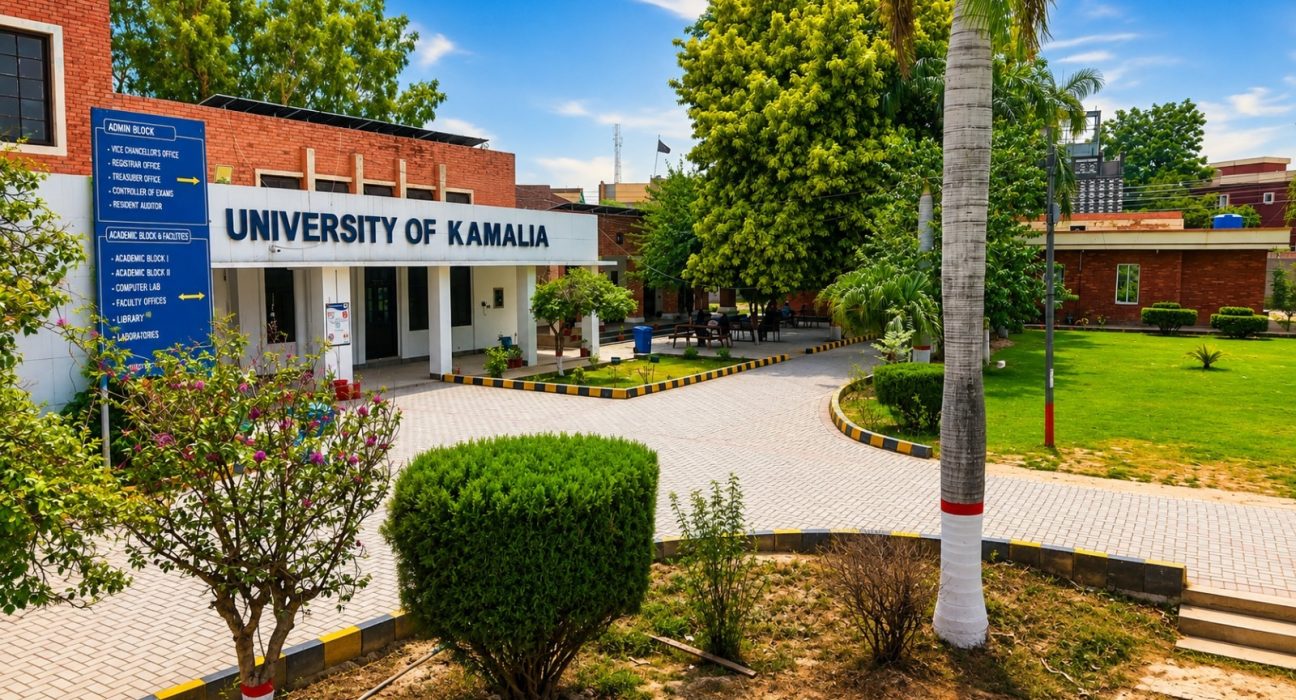
A major UK-backed initiative to convert agricultural waste into clean energy and value-added products has been formally launched at the University of Kamalia (UKM), with a total grant of £1.245 million, approximately PKR 460 million, under the UK Government’s Innovate UK Energy Catalyst programme.
The 24-month SAFER PLUS project aims to transform agricultural residues, particularly cotton stalks and sugarcane bagasse, into clean and usable energy, industrial fuel, electricity, process heat and other agricultural products. The initiative is being described as the first of its kind in Pakistan and is expected to provide a new model for sustainable energy generation and rural economic development.
The University of Kamalia will serve as the lead institution and central demonstration host in Pakistan, while a dedicated BioHub will be established on its campus. The facility is expected to demonstrate how agricultural waste can be processed into useful products while reducing environmental pollution and supporting local industries.
The international consortium includes Eco Research Ltd, UK, as the project lead; Northumbria University, UK; Pakistan-based Prime Eurotech Pvt. Ltd.; and the University of Kamalia. The participation of Northumbria University is also expected to strengthen research, technological development and industrial collaboration between Pakistan and the United Kingdom.
The BioHub at the University of Kamalia is expected to process around 5,000 tonnes of agricultural biomass annually and produce an estimated 3,000 to 4,000 tonnes of biochar. The biochar could be used as an alternative to conventional coal in industrial furnaces, boilers and other applications, potentially helping reduce dependence on imported coal.
SAFER PLUS will use an integrated system in which agricultural residues are converted into biochar, electricity, surplus heat and other useful by-products, including wood vinegar. The project is expected to generate around 20 to 40 kilowatts of electricity from process gases, while surplus heat will be supplied to nearby khaddar textile dyeing units.
The provision of process heat could offer local textile businesses and artisans an alternative energy source while creating stronger links between clean-energy production and local industrial activity. The integrated system is also designed to make use of resources generated within the process itself, reducing dependence on external fuels.
A major social component of the project is the establishment of a women-led Biomass Cooperative. The cooperative will support the collection, availability, transportation and quality management of agricultural residues from rural areas. Through this initiative, farming families are expected to gain additional income opportunities, while rural women will have greater access to dignified employment and participation in economic activities.
The project could also help tackle the widespread practice of open burning of agricultural residues, which contributes to air pollution and the loss of potentially valuable biomass resources. By converting agricultural waste into energy and industrial products, SAFER PLUS aims to promote a circular bioeconomy while addressing energy and environmental challenges.
Speaking at the launch, University of Kamalia Vice Chancellor Prof Dr Yasir Nawab described SAFER PLUS as an important milestone for the university and a significant example of how modern research and international partnerships can transform local resources into energy, industrial solutions and economic opportunities.
Prof Dr Yasir Nawab said the selection of the University of Kamalia as the implementation partner and central demonstration hub in Pakistan reflected the institution’s growing role in research, innovation and international academic and industrial collaboration.
He expressed hope that the project would benefit not only Southern Punjab but also provide a practical and replicable model that could eventually be adopted in other agricultural regions of Pakistan.
From the University of Kamalia, Prof Dr Yasir Nawab and Dr Sarmad Masood Shaheen are leading key responsibilities under the project. The international partners are represented by Dr Muhammad Sagheer of Eco Research Ltd and Dr Jibran Khaliq and Dr Shahid Rasool of Northumbria University.
If successfully demonstrated, the SAFER PLUS model could be expanded to other agricultural regions, enabling Pakistan to extract greater value from agricultural residues while reducing pollution, supporting local industries and generating new employment opportunities.
Rrelated: Kamalia University Sparks Debate on AI in Higher Education
Backed by the UK Government, international research partners and the implementation capacity of the University of Kamalia, SAFER PLUS represents a significant effort to turn agricultural waste in Southern Punjab from an environmental challenge into a source of clean energy, rural employment and sustainable economic development.
