

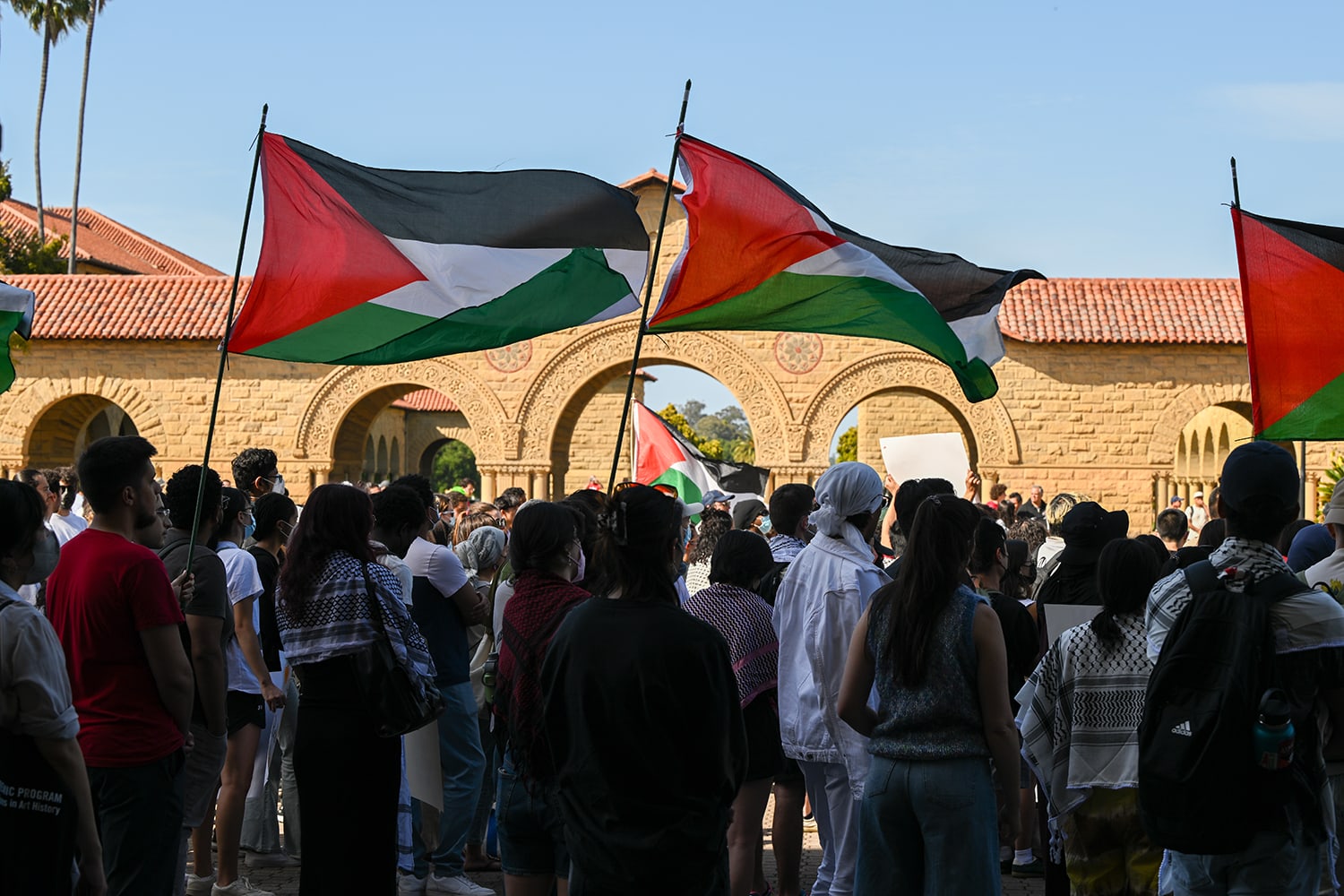
Five current and former Stanford University students facing felony charges over a 2024 pro-Palestine protest will have their cases dismissed after reaching an agreement with the California Attorney General’s Office, bringing a two-year legal dispute to an end.
The five students were among a larger group involved in the June 5, 2024 occupation of Stanford’s president and provost executive offices. The protesters barricaded themselves inside the building during a demonstration calling on the university to divest from investments connected to Israel. They were subsequently charged with felony vandalism and conspiracy to trespass.
The resolution announced on September 21 requires each of the five students to complete 100 hours of community service and collectively pay approximately $52,000 in restitution to Stanford. The restitution, reported at $51,973.37, has already been paid, while the charges are to be dismissed under the diversion agreement once the required conditions are completed.
The case had already gone through a lengthy legal process. A trial earlier in 2026 ended in a mistrial after jurors failed to reach a unanimous verdict. The Santa Clara County District Attorney’s Office initially planned to retry the students, but a judge later removed District Attorney Jeff Rosen and his office from the case following defense arguments concerning a conflict of interest. The California Attorney General’s Office subsequently took over the prosecution.
The students were among thousands of people arrested during pro-Palestinian demonstrations at US universities in 2024. Many of those protests focused on university investments, institutional ties and calls for divestment amid the Israel-Hamas war. The Stanford case attracted particular attention because the defendants faced felony allegations and a criminal trial after occupying university offices.
The June 2024 action followed months of campus demonstrations at Stanford. Students had established pro-Palestinian encampments and organized rallies before the administration-office occupation. The university subsequently initiated disciplinary proceedings against students involved in the protests.
California Attorney General Rob Bonta’s office said the resolution was reached after taking over the case from the Santa Clara County prosecutor. The outcome means the five remaining defendants will not face a retrial on the felony charges following the earlier hung jury.
The resolution has been welcomed by organizations supporting the students, while the case has continued to generate debate over the boundaries between campus protest, property damage, university disciplinary authority and criminal prosecution. Stanford accepted the agreement as the legal process concluded.
Related: Sundar Pichai Faces Student Protest at Stanford Graduation
The Stanford case also reflects the broader legal aftermath of the wave of pro-Palestinian campus demonstrations that swept US universities in 2024. While students at different institutions faced suspensions, expulsions and criminal charges, many criminal cases were ultimately dismissed or resolved through diversion agreements.
