

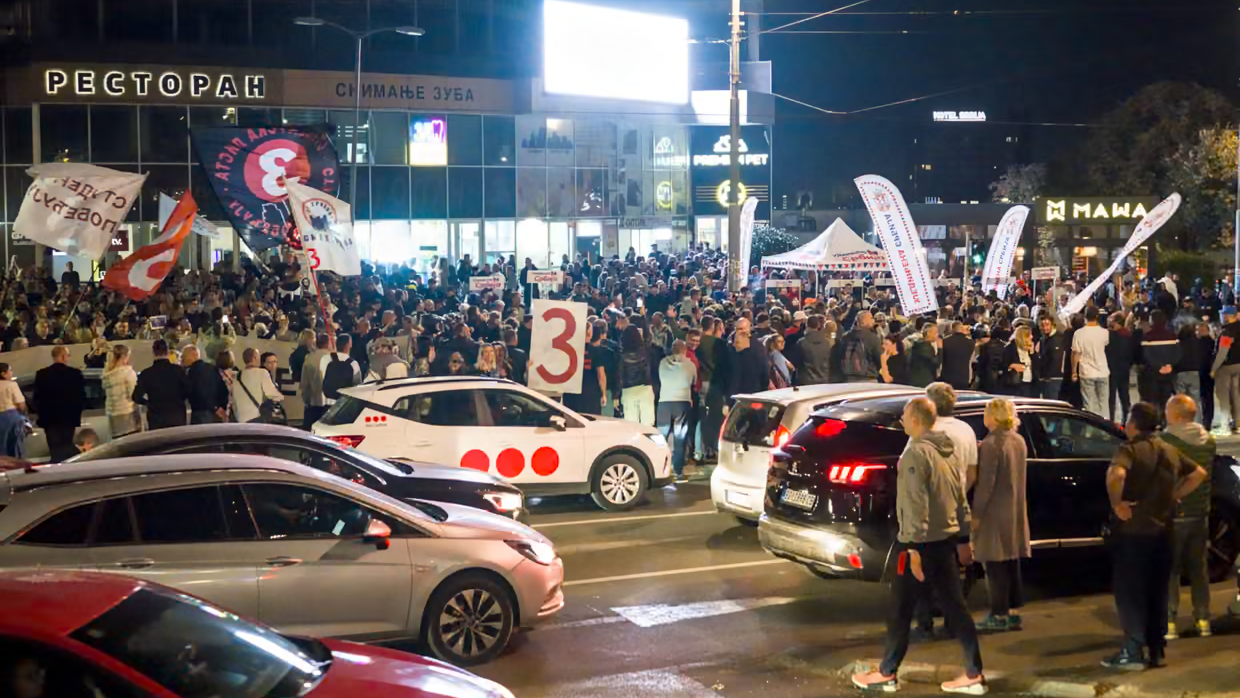
Serbia is heading toward a potentially defining parliamentary election on October 25, with a student-led political movement emerging as the strongest challenge yet to Aleksandar Vučić’s long dominance of the country’s politics.
The movement began after the November 2024 collapse of a railway station canopy in Novi Sad killed 16 people. Students initially demanded accountability and investigations into alleged corruption and negligence surrounding the station’s reconstruction. What began as campus protests soon developed into nationwide demonstrations, drawing support from citizens, farmers, academics and other sections of society.
Nearly two years later, the students have moved beyond street protests and entered the electoral arena. Their “Students Win” list is fielding 250 candidates, including university professors, academics, artists, farmers and other public figures. The movement has deliberately avoided a conventional political leadership structure, with decisions made through university assemblies and a rotating network of organizers.
The election represents a major test for Vučić, who has dominated Serbian politics since 2014, first as prime minister and later as president. He resigned as president in September because of constitutional term limits and is seeking to return as prime minister through the snap parliamentary election, keeping his political influence at the centre of the campaign.
A poll published on October 20 by the New Serbian Political Thought research group put the Student List at 44.5% among decided voters who said they intended to vote, compared with 42.7% for the list backed by Vučić. The poll is only one measure of public opinion, however, and other indicators, including betting markets, have continued to favour Vučić.
The students have built their campaign through door-to-door canvassing, peaceful marches and direct engagement with voters across Serbia. Their decentralized structure has also made it harder for the authorities to target a single leader, while their campaign focuses on combating corruption, strengthening institutions, improving media freedom and reforming education.
Vučić and his political allies have sought to portray the movement as a threat to Serbia and have accused foreign actors of supporting it, allegations the students reject. Critics of the government, meanwhile, accuse the authorities of suppressing dissent, weakening democratic institutions and exerting pressure over the media. The government has denied allegations of wrongdoing and repression.
Beyond the question of who wins the election, the student movement faces another challenge: whether it can transform a powerful protest network into an effective governing force. Its candidates have promised institutional and anti-corruption reforms, but questions remain over its economic programme, foreign policy, Serbia’s EU accession and relations with Russia, China and Kosovo.
Related: German Cities Set for Student Protests on October 31
The October 25 vote could therefore become a turning point in Serbian politics. After nearly two years of protests, the country’s students are no longer simply demanding political change from the streets. They are attempting to win it at the ballot box, putting Vučić’s long-standing political dominance under its most serious electoral pressure yet.
