

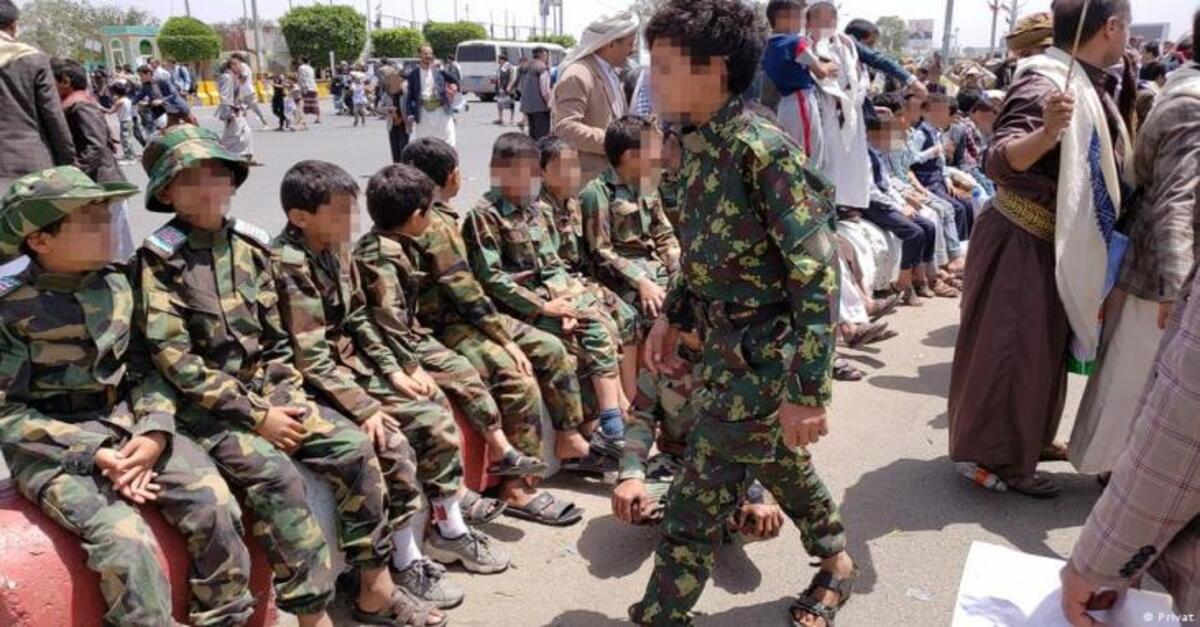
The Houthi movement has threatened dozens of private schools in Yemen’s capital, Sanaa, with heavy fines and possible closure for refusing to involve students and teachers in activities promoting its military mobilisation campaign, raising fresh concerns about the politicisation of education and the safety of children.
According to a report published by Asharq Al-Awsat, the group has ordered private schools in Sanaa and surrounding areas to organise at least three student marches and rallies every week. The activities are intended to promote its military escalation in Taiz and other battlefronts while expressing support for Houthi leader Abdul-Malik al-Houthi.
The directives require schools to hold gatherings both inside school premises and in nearby streets, taking time away from regular classroom instruction and turning educational institutions into platforms for political propaganda and military mobilisation.
School administrations in several districts, including Safiya, Sabeen, Azal, Wehda and Tahrir, have reportedly resisted the orders amid growing pressure from parents who are threatening to withdraw their children if schools continue disrupting lessons for activities unrelated to education.
In response, the education ministry operating under the Houthi-controlled administration has reportedly threatened schools with financial penalties and other administrative measures. School authorities are also facing pressure through annual licence renewals, which have allegedly been used to force institutions into implementing the mobilisation programmes.
Parents and teachers have expressed growing concern over the impact of these activities on students’ education and future. One parent in Sanaa said families were already struggling to afford tuition fees and transportation costs and feared that participation in political rallies could eventually lead to children being pushed towards military training and frontline recruitment.
A teacher in the Azal district said the activities were increasingly interfering with regular school schedules and reducing the time available for core academic subjects. Teachers who refuse to organise student gatherings or make pupils chant Houthi slogans have reportedly faced threats of disciplinary action and other penalties.
The latest pressure campaign follows earlier reports that the Houthis had expanded their student recruitment efforts across private schools in Sanaa. In October, Asharq Al-Awsat reported that more than 550 private schools had come under pressure to select students for military training programmes, with institutions facing threats of closure and financial penalties for non-compliance.
The developments are adding to an already severe education crisis in Houthi-controlled areas, where years of conflict, economic hardship and interference in school administration have weakened educational institutions. The group has also faced repeated allegations of changing school curricula and introducing ideological activities that expose children to political indoctrination and military mobilisation.
The education sector is further struggling with the prolonged non-payment of salaries to teachers. According to the report, approximately 170,000 teachers and education employees in Houthi-controlled areas have been without regular salaries since 2016, despite taxes and annual fees collected from educational institutions.
Related: Students Reject Elitist Education Policies in Belgium
The growing confrontation between school administrations and Houthi authorities has placed families and educators in an increasingly difficult position, caught between protecting children’s access to education and facing threats of institutional closure. The situation has renewed concerns over the future of thousands of Yemeni students whose classrooms are increasingly being drawn into the country’s prolonged conflict.
