

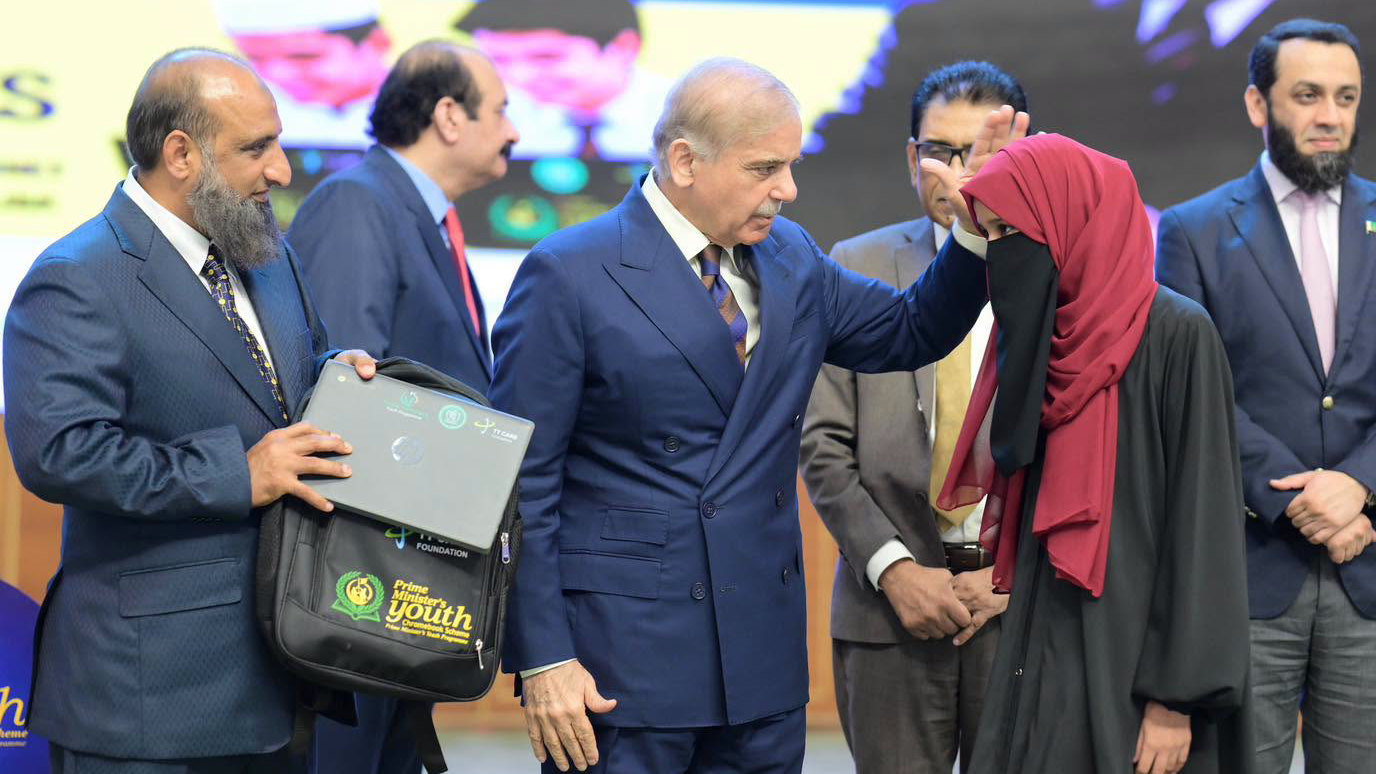
Prime Minister Shehbaz Sharif has launched a nationwide initiative to distribute 500,000 Chromebooks and internet devices among talented students, aiming to expand access to digital education and ensure that financial circumstances do not prevent young people from accessing modern learning opportunities.
The Prime Minister’s Youth Chromebook Scheme, formally launched in Islamabad on October 25, will provide Chromebooks to students across Pakistan over the next two years. The devices are being distributed on the basis of merit, with students from schools and registered religious seminaries included in the programme.
Addressing the launch ceremony, Prime Minister Shehbaz said intelligence, hard work and academic ability should not be limited by wealth or poverty. He said the government’s responsibility was to provide young people with the tools required to continue their education and compete in an increasingly technology-driven world.
The selected students will receive a bag and MiFi device along with their Chromebooks. The internet-enabled devices are intended to allow students to attend classes remotely, access electronic libraries and continue learning beyond the classroom. Chairman of the Prime Minister’s Youth Programme (PMYP) Rana Mashhood Ahmad Khan said high-speed internet connectivity would also be provided to 500,000 students, with each connection potentially extending digital access to up to five people, reaching an estimated 2.5 million individuals.
The initiative also seeks to widen digital learning opportunities for students enrolled in religious seminaries. Prime Minister Shehbaz said students from seminaries would be treated equally under the scheme, with merit and academic performance serving as the key criteria.
The prime minister recalled earlier laptop distribution programmes under which around 600,000 laptops were provided to students across Pakistan over a decade. He said the new target of 500,000 Chromebooks within two years reflected the government’s intention to accelerate access to technology for talented students.
Education officials have presented the programme as part of a broader effort to bring Pakistan’s education system closer to changing global trends, particularly the growing role of digital learning, technology skills and online educational resources. Federal Education and Professional Training Minister Khalid Maqbool Siddiqui said investment in education was essential for turning the country’s large youth population into a productive national asset.
The scheme comes as Pakistan expands other initiatives aimed at improving access to quality education. Prime Minister Shehbaz also highlighted the Daanish Schools programme, saying 27 schools were under construction across the country. According to the prime minister, the institutions will feature smart boards, electronic libraries, sports facilities, residential accommodation and other services, with students receiving education without financial burden.
The government has increasingly linked access to digital technology with educational continuity and future employment. Prime Minister Shehbaz pointed to the experience of the Covid-19 pandemic, when digital devices enabled students to continue university classes and learning while educational institutions were disrupted.
The new Chromebook initiative is also supported by the Tokyo Technology Care Foundation, whose chairman Rashid Minhas said the partnership with the government was aimed at helping students expand their digital reach and become active participants in the digital economy. The prime minister thanked the foundation and overseas Pakistanis for supporting educational opportunities for Pakistani youth.
The initiative comes at a time when digital access is increasingly becoming a fundamental part of education, from online classrooms and electronic libraries to digital skills and technology-based careers. By placing internet-connected devices in the hands of high-achieving students, the government says it hopes to reduce the technology gap and give talented young people greater opportunities to learn, develop skills and pursue higher education.
Prime Minister Shehbaz said education and ability were assets that could not be taken away from a person, regardless of their financial circumstances. He urged students receiving the devices to use the technology to acquire knowledge, develop their capabilities and prepare themselves to contribute to Pakistan’s future.
Related: Daanish Schools Expand Vision of Equal Education
The government’s two-year Chromebook target therefore represents more than a device-distribution programme; it is an attempt to expand the reach of digital education beyond traditional classrooms and connect academic merit with access to modern learning technology.
