

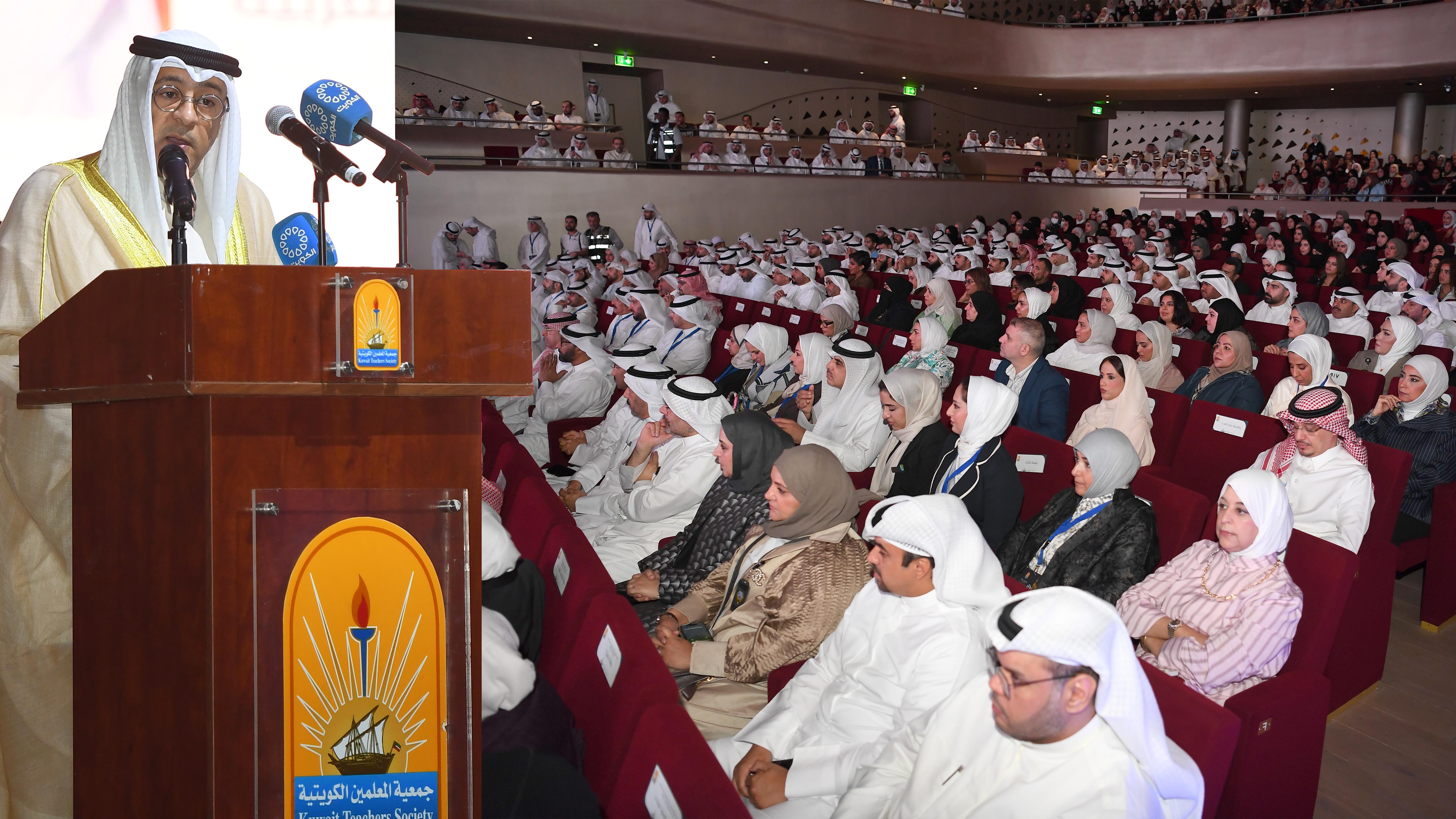
The 46th Educational Conference opened in Kuwait City on October 4 under the theme “Innovative Visions for a Sustainable Educational Future in Kuwait,” bringing together education specialists, academics and educators to discuss the future of education across the Gulf.
Gulf Cooperation Council (GCC) Secretary General Jasem Mohamed Albudaiwi said the conference reflects the importance GCC states place on strengthening education and developing systems capable of meeting future challenges.
Albudaiwi highlighted education as a central pillar of GCC cooperation, noting that joint educational efforts began even before the establishment of the GCC in 1981 through the Arab Bureau of Education for the Gulf States, founded in 1975.
He said more than 11 million students were enrolled in public education across GCC states during the 2024–2025 academic year, supported by more than 45,000 schools and educational institutions and over 960,000 teachers.
The Secretary General also pointed to growing educational integration among GCC countries. More than 41,000 GCC citizens studied in public schools in other member states during the 2025–2026 academic year, which he described as a practical example of regional integration and the concept of Gulf citizenship.
The conference also comes as GCC education authorities pursue new strategies focused on innovation, entrepreneurship and closer cooperation. Education ministers have approved a Strategic Plan for Innovation and Entrepreneurship in Higher Education, while preparations are underway for a Strategic Plan for Joint Action in Education covering 2027–2032.
Albudaiwi stressed that rapid advances in artificial intelligence, digital transformation, modern technologies, innovation and space technology are changing the skills students will need in the future.
He called for education systems and curricula to be viewed from new perspectives rather than relying solely on traditional approaches, with greater emphasis on preparing students to adapt to emerging technologies and a changing labour market.
Related: Students Pay the Price as Sweida Standoff Continues
The conference is expected to produce recommendations aimed at translating discussions on innovation and educational development into practical measures that can strengthen education across the GCC and better prepare future generations.
