

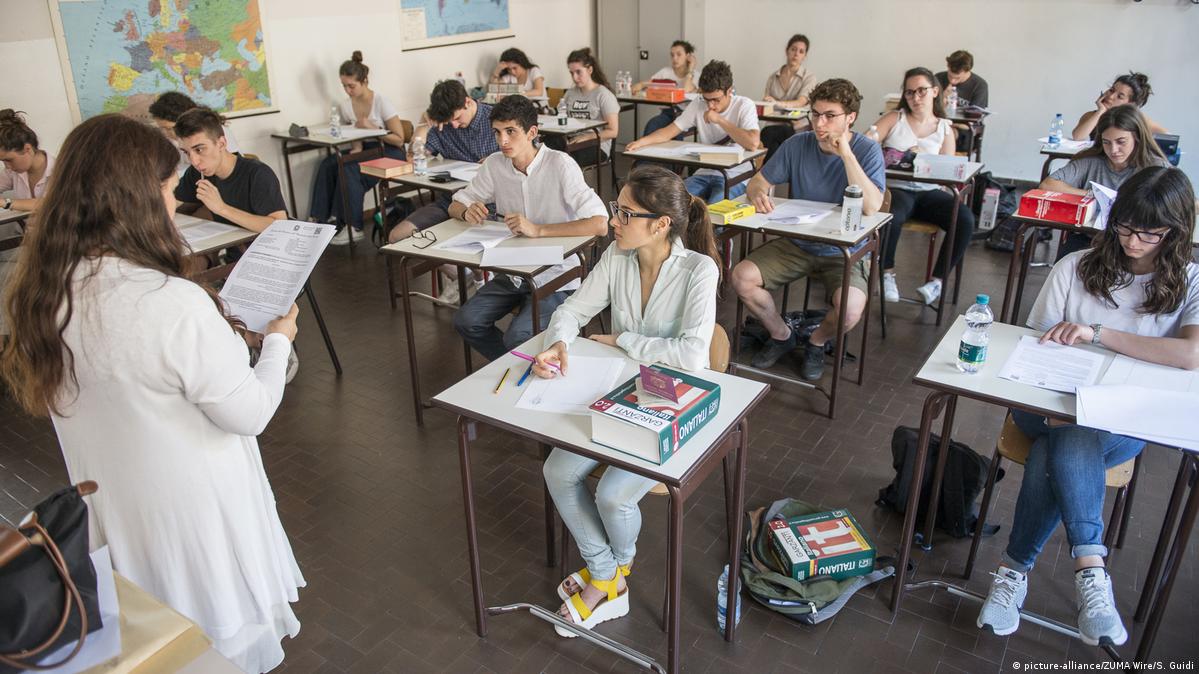
Italy is preparing new measures that could reshape how schools manage face coverings, language integration and the enrolment of foreign students, Prime Minister Giorgia Meloni has announced.
Speaking at an annual youth event organised by her Brothers of Italy party, Meloni said the government would soon present legislation to the Cabinet introducing a maximum number of foreign students per class. The proposed measures would also require parents of foreign students experiencing serious difficulties integrating into the Italian school system to learn Italian.
The government is additionally preparing restrictions on full-face coverings such as the burqa and niqab in schools. Meloni said students should attend school with their faces uncovered, arguing that schools have a responsibility to promote integration and ensure effective communication between students and teachers.
The proposed restrictions come amid a wider debate in Italy over immigration, cultural integration and the role of religious symbols in public institutions. Italy has experienced significant migration because of its location along the central Mediterranean migration route, making the integration of migrant communities an important issue for the country’s education system.
Meloni argued that the concentration of students who do not understand Italian can affect the integration process. She contrasted a situation in which a single student is learning the language with classrooms where a large proportion of students have limited Italian-language skills.
The prime minister said the government viewed language acquisition as an important part of successful integration into Italian schools and society.
However, the proposed foreign-student cap would not represent an entirely new concept in Italian education policy. Italy already has regulations limiting the proportion of students who are not Italian citizens in classrooms and schools. Since 2010, the limit has generally been set at 30 percent, although exceptions can apply in certain circumstances.
Meloni did not provide details on whether the government intends to lower the existing threshold, change how it is applied or introduce a different mechanism for determining the number of foreign students in individual classes.
The proposed restrictions on face coverings also build on an existing legal framework. Italy does not currently have a law specifically banning burqas or niqabs in schools or across all public spaces. A 1975 law prohibits the use of helmets or clothing that makes identification difficult without a justified reason.
Italy’s highest administrative court clarified in 2008 that full-face veils could be worn for religious or cultural reasons, while requiring the face to be uncovered when identity verification is necessary.
The issue has nevertheless remained politically sensitive. Calls for stricter restrictions on face coverings in schools have also come from parties further to the right of Meloni’s governing coalition.
The debate comes as Italian schools serve an increasingly diverse student population. According to research institution Fondazione ISMU, students who are not Italian citizens account for 11.6 percent of pupils enrolled in Italian schools, equivalent to almost 12 students out of every 100.
The government’s forthcoming proposals are therefore expected to have implications not only for immigration policy but also for classroom composition, language support and the integration of international and migrant-background students.
Related: Italy Tightens Visa Rules for International Students
For Italy’s education system, the central question will be how new restrictions and enrolment rules can be balanced with schools’ responsibilities to provide equal access to education, effective language support and an environment in which students from different cultural backgrounds can participate fully in school life.
