

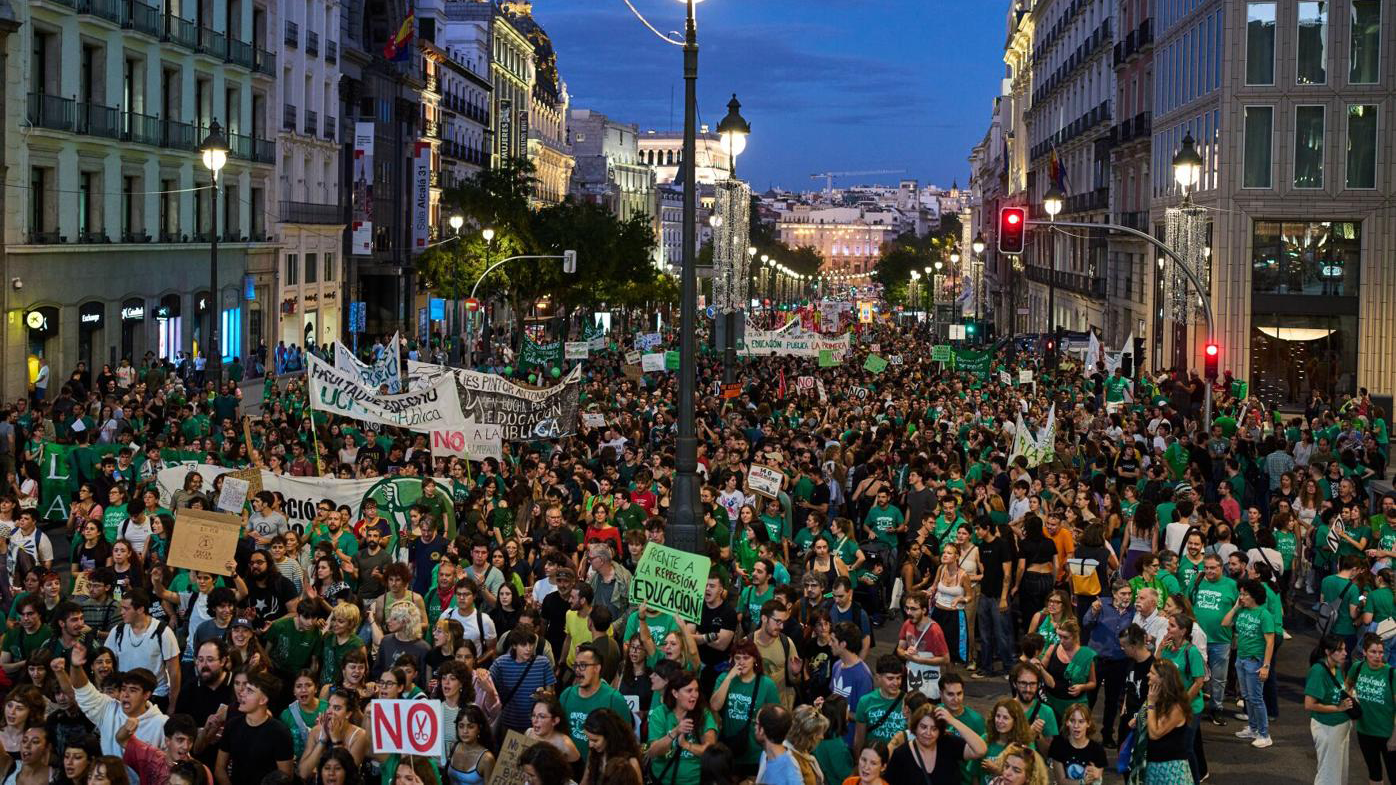
Thousands of teachers, students and families took to the streets of Madrid on Wednesday as an indefinite strike over public education began across the region, with unions demanding higher salaries, smaller classes, reduced teaching hours and greater investment in schools.
The strike involves around 65,000 teachers in Madrid’s non-university public education system, serving more than 666,000 students. Major unions and education platforms called the open-ended action after months of failed negotiations with the regional government.
Demonstrators marched through central Madrid carrying banners defending public education and calling for improved working conditions and greater resources. The Government Delegation estimated around 25,000 people attended the main demonstration, while unions reported significantly higher support for the strike.
Teachers are seeking an additional €600 in monthly pay, lower student-to-teacher ratios, fewer teaching hours and stronger support for special education. Their demands include reducing teaching hours to 22 per week in primary education and 17 in secondary education, alongside improvements to ageing school infrastructure and other working conditions.
The first day also brought tensions at the Complutense University of Madrid (UCM), where police intervened during student demonstrations. Five people were arrested, while several protesters and two police officers were reported injured. The incident prompted criticism from university and political groups, while regional authorities defended the police response.
The scale of the strike remains disputed. Madrid’s regional government put participation at 44.6%, while unions estimated it at around 70%. Education Minister Mercedes Zarzalejo described the action as politically motivated, while unions said the dispute was focused on resources, working conditions and the future of public education.
Related: 23 Arrested as Student Protests Rock Albania
With the strike having no fixed end date, teachers and unions say they will continue their action until the regional government agrees to meaningful negotiations over salaries, class sizes, teaching hours and investment in Madrid’s public education system.
