

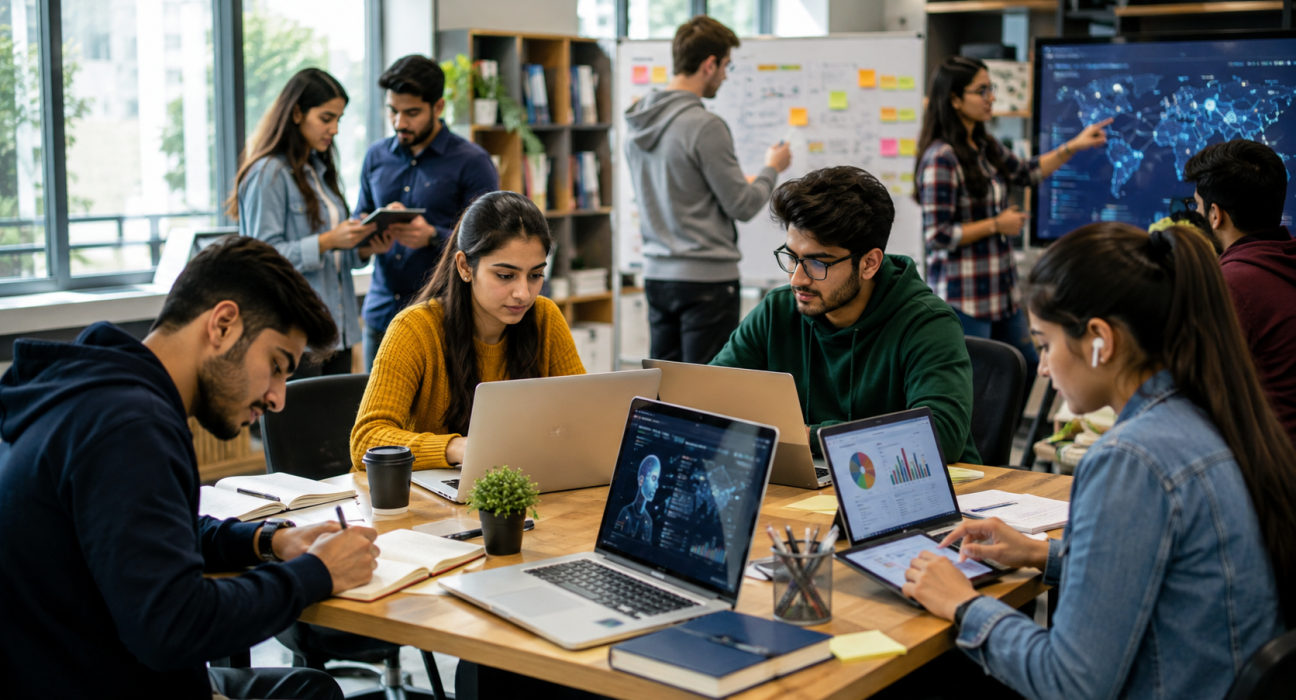
Graduation is often seen as the final step of education, but in reality, it is the beginning of a much bigger journey. A degree can help you enter the job market, but your ability to grow, adapt and solve problems determines how far you can go. Employers today are increasingly looking beyond academic qualifications and searching for candidates who can contribute from day one. This is why understanding the top skills every graduate needs has become essential for students and young professionals. The modern workplace is changing rapidly because of artificial intelligence, automation, remote work and digital transformation.
Whether you are a business graduate, engineer, IT professional, teacher or social sciences student, developing the top skills every graduate needs can make your CV stronger and improve your chances of building a successful career.
Communication Skills
Strong communication is among the most important of the top skills every graduate needs. Being academically qualified is not enough if you cannot clearly express your ideas. Graduates should be able to communicate effectively through emails, presentations, meetings and everyday workplace conversations. Good communication also includes active listening, asking relevant questions and explaining complicated ideas in simple language. Employers value people who can communicate confidently with colleagues, managers, clients and customers. Improving this skill can help graduates perform better in interviews and develop stronger professional relationships.
Critical Thinking and Problem-Solving
Another crucial skill among the top skills every graduate needs is the ability to think critically. Employers do not simply want employees who can follow instructions; they want people who can identify problems and find practical solutions. Critical thinking involves examining information carefully, questioning assumptions and considering different possibilities before making a decision. Problem-solving, meanwhile, requires graduates to understand a challenge, identify its cause and develop an effective solution. Students can strengthen these abilities by working on real-world projects, participating in discussions and analysing case studies.
Digital Literacy
In today’s technology-driven workplace, digital literacy is undoubtedly one of the top skills every graduate needs. Graduates do not necessarily need to become programmers, but they should be comfortable using common digital tools. Depending on their career field, this could include Microsoft Office, Google Workspace, project-management platforms, data-analysis tools, communication software and industry-specific applications. Understanding how technology works also allows graduates to adapt more easily when companies introduce new systems. Basic knowledge of artificial intelligence and responsible AI use can further strengthen a candidate’s professional profile.
Artificial Intelligence Skills
AI has transformed the workplace, making AI awareness one of the fastest-growing additions to the top skills every graduate needs. Graduates should understand how AI tools can support research, writing, analysis, automation and productivity. However, AI skills are not simply about knowing how to use a chatbot. Graduates should also understand how to verify AI-generated information, protect confidential data and recognise potential biases or inaccuracies. Learning how to use AI responsibly can help young professionals save time and focus on higher-value tasks. Those who combine AI knowledge with expertise in their chosen field can become particularly valuable to employers.
Adaptability and Willingness to Learn
The ability to adapt is another key element of the top skills every graduate needs. Career paths are no longer as predictable as they once were, and professionals may need to learn new technologies, change responsibilities or even move into entirely different roles. Graduates who demonstrate curiosity and a willingness to learn are better prepared for these changes. Instead of viewing new challenges as obstacles, adaptable employees see them as opportunities to develop. Taking online courses, attending workshops, reading industry publications and experimenting with new tools can help graduates build a continuous-learning mindset.
Teamwork and Collaboration
Modern workplaces depend heavily on collaboration, making teamwork one of the top skills every graduate needs. Even employees working independently often have to coordinate with colleagues, managers, clients or external partners. Effective teamwork involves respecting different opinions, sharing responsibilities, resolving disagreements and contributing toward a common goal. Graduates can demonstrate this skill through university projects, internships, volunteer activities and extracurricular societies. Employers often look for candidates who can work professionally with people from different backgrounds and personalities.
Time Management and Organisation
Managing deadlines effectively is another important part of the top skills every graduate needs. Once graduates enter professional life, they may have multiple assignments, meetings and responsibilities competing for their attention. Good time management allows employees to prioritise important tasks instead of constantly reacting to urgent ones. Simple practices such as creating daily task lists, setting deadlines and breaking large projects into smaller steps can significantly improve productivity. Being organised also demonstrates reliability. An employee who consistently completes work on time is more likely to earn the trust of managers and colleagues.
Emotional Intelligence
Emotional intelligence is often overlooked when discussing the top skills every graduate needs, but it can have a major impact on professional success. Emotional intelligence involves understanding your own emotions while also recognising and responding appropriately to the emotions of others. A graduate with strong emotional intelligence can handle workplace pressure, accept constructive criticism, resolve conflicts and build positive relationships. This skill becomes particularly important as professionals move into leadership positions. Technical expertise may help someone get a job, but emotional intelligence can help them manage people and navigate challenging workplace situations.
Why These Skills Matter for Graduates?
The top skills every graduate needs are not limited to technical abilities. The modern employer increasingly looks for a combination of knowledge, practical skills and personal qualities. A graduate with a strong academic record but weak communication or adaptability may struggle in a competitive workplace. On the other hand, someone who combines their degree with digital literacy, critical thinking, teamwork and communication can stand out. The top skills every graduate needs should therefore be developed alongside academic education rather than after graduation. Students can start building them through internships, freelance projects, student societies, volunteering, online courses and personal projects.
It is also important to remember that these skills work together. Strong communication makes teamwork easier, critical thinking improves problem-solving, digital literacy supports productivity and emotional intelligence strengthens professional relationships.
Other than Top Skills Every Graduate Needs, you can also explore Most In-Demand Digital Skills in 2026
Thus, the top skills every graduate needs are those that help them remain useful, flexible and confident in an evolving professional environment. A degree may open the door, but these skills can help graduates walk through it and continue progressing.
Frequently Asked Questions
What are the top skills every graduate needs?
The top skills every graduate needs include communication, critical thinking, problem-solving, digital literacy, AI skills, adaptability, teamwork, time management and emotional intelligence.
Why are soft skills important for graduates?
Soft skills help graduates communicate, collaborate, manage workplace challenges and build professional relationships. Alongside technical knowledge, they form an important part of the top skills every graduate needs for long-term career growth.
How can graduates develop these skills?
Graduates can develop the top skills every graduate needs through internships, online courses, university projects, volunteering, freelance work, workshops and practical experience. Consistent practice is often more valuable than simply learning the theory.
