

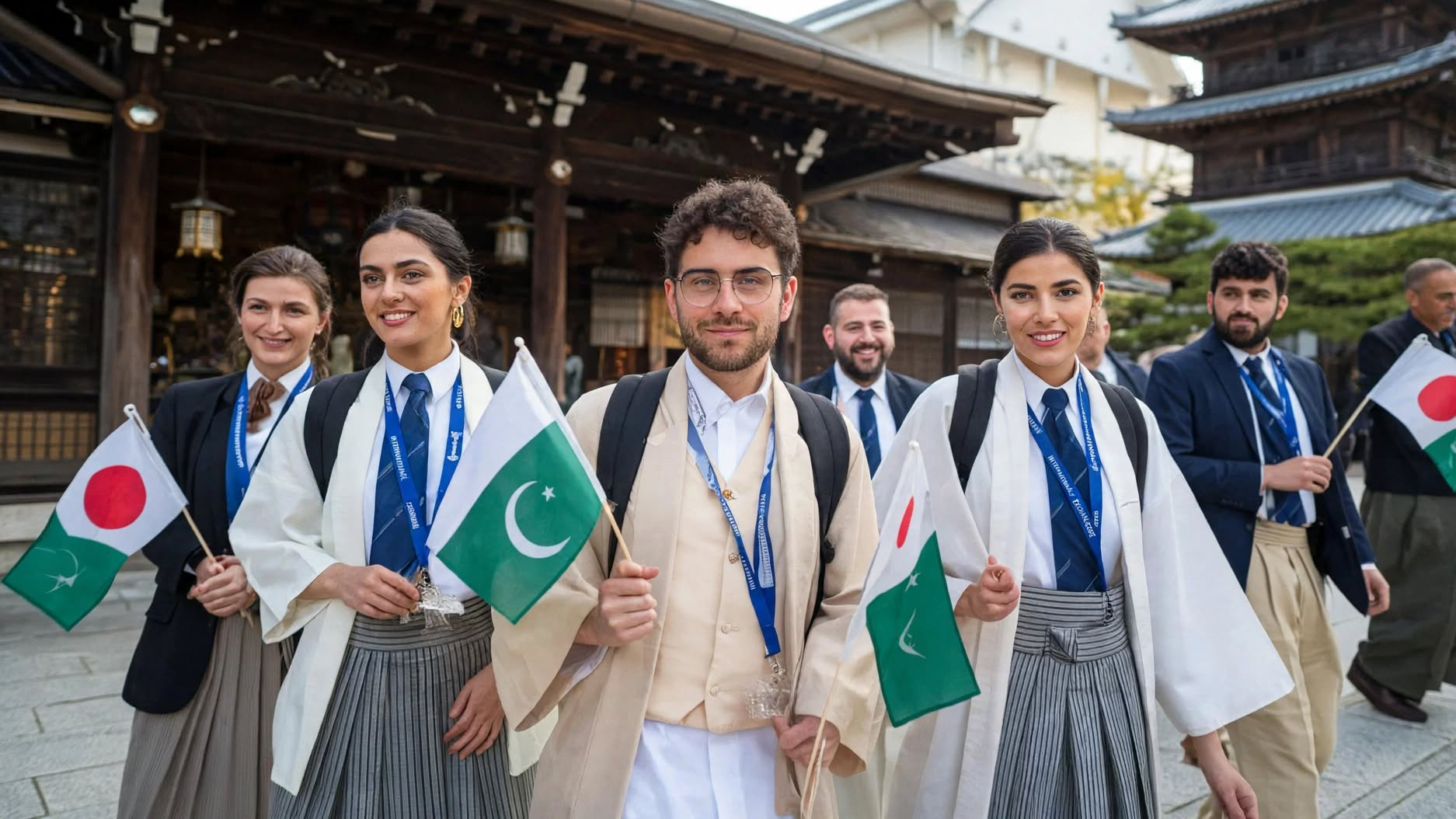
For Pakistani students looking for an international education destination, Japan offers a combination of globally respected universities, advanced technology, research opportunities, and a unique cultural experience. From undergraduate and master’s degrees to PhD and research programmes, Japanese institutions offer opportunities across a wide range of academic fields. However, students need to understand the admission process, costs, scholarships, language requirements, visa procedures, and living conditions before applying. In this article, we will explore why students should study in Japan and what Pakistani students need to know before making an informed decision about studying in Japan.
Why Study in Japan?
Japan is home to internationally recognised universities and has a strong reputation in areas such as engineering, robotics, medicine, information technology, environmental sciences, business, and natural sciences. The country also has a strong research ecosystem, making it particularly attractive for postgraduate students. For Pakistani students, study in Japan: what Pakistani students need to know starts with understanding that Japan has both Japanese-taught and English-taught degree programmes. Therefore, students should search for programmes based on their academic background and language ability.
Another important point in study in Japan: what Pakistani students need to know is that international students can find universities with different tuition structures, admission requirements, and scholarship opportunities.
What Are the Types of Programmes Available?
International students can apply for undergraduate, master’s, doctoral, and research programmes in Japan. Some universities also offer preparatory programmes and exchange opportunities. Bachelor’s programmes generally require students to have completed their secondary education. Master’s applicants normally need a relevant bachelor’s degree, while PhD applicants generally require a relevant master’s degree or equivalent qualification. For Pakistani applicants, study in Japan: what Pakistani students need to know includes carefully checking whether their Pakistani qualification meets the academic requirements of the particular Japanese university.
Requirements can differ considerably between institutions, so students should always check the official university admission page before applying.
What Are the English-Taught Programmes?
Students who do not speak Japanese should not automatically assume that studying in Japan is impossible. Many Japanese universities offer programmes taught partly or entirely in English, particularly at the graduate level. However, the availability of English-taught programmes depends on the university and subject. Students may need an English-language test such as IELTS or TOEFL, although requirements vary. This is another key part of study in Japan: what Pakistani students need to know: meeting the university’s academic requirements does not necessarily mean that the applicant meets its language requirements.
Students interested in Japanese-taught programmes may need to demonstrate Japanese-language proficiency. Learning basic Japanese can also make everyday life considerably easier, even when the degree itself is taught in English.
What Are the Tuition Fees and Living Costs?
The cost of studying in Japan depends on the university, degree programme, location, and lifestyle. Students should consider both tuition fees and living expenses when preparing their financial plan. National and public universities generally have standardised tuition structures, while private universities can have different and sometimes higher costs. Students may also have to pay admission or examination-related fees. Living expenses include accommodation, food, transportation, health insurance, utilities, study materials, and other personal expenses.
Therefore, study in Japan: what Pakistani students need to know is not simply about tuition. Students should calculate the complete annual cost before accepting an offer. Tokyo and other major cities can be relatively expensive, while living costs may differ in smaller cities and towns. University dormitories can sometimes provide a more economical accommodation option for international students.
What Are the Scholarships for Pakistani Students?
One of the most important aspects of study in Japan: what Pakistani students need to know is the availability of scholarships. The Japanese government offers the MEXT Scholarship, formally known as the Japanese Government (Monbukagakusho) Scholarship. Depending on the scholarship category, it can support students at different academic levels and may include tuition support, a monthly stipend, and other benefits. MEXT applications can be handled through Japanese embassies or universities, depending on the scholarship route and category.
Pakistani students should monitor the Embassy of Japan in Pakistan and official Japanese university websites for application announcements and deadlines. Universities may also offer their own scholarships or tuition reductions. Because eligibility and benefits vary, students should carefully read the conditions of each scholarship.
For anyone researching study in Japan: what Pakistani students need to know, scholarships can significantly affect the overall financial planning of an international degree.
What is the Admission Process?
The admission process varies from university to university. Generally, students may need academic transcripts, degree certificates, a statement of purpose, recommendation letters, proof of language proficiency, a CV, and sometimes a research proposal. PhD and research applicants should pay particular attention to their research proposal. Some programmes may also require students to contact a prospective supervisor before applying. Students should begin preparing documents several months before the deadline. A strong application is another important element of study in Japan: what Pakistani students need to know, because missing a required document or misunderstanding an application deadline can affect eligibility.
How to Get Student Visa for Japan?
After receiving admission from a Japanese institution, international students generally need to obtain the appropriate visa before travelling to Japan. The university or educational institution typically assists with the Certificate of Eligibility process. The student then applies for a visa through the relevant Japanese diplomatic mission. Pakistani students should check the latest visa requirements and documentation directly with the Embassy or Consulate of Japan because procedures and document requirements can change.
Can International Students Work?
International students may be able to work part-time in Japan, but they must obtain the appropriate permission and follow the applicable restrictions. Part-time employment should not be treated as the primary method of financing an education. Students should first ensure that they have sufficient funds for tuition and living expenses. For study in Japan: what Pakistani students need to know, understanding employment restrictions is important because international students have specific immigration conditions.
How is Life in Japan?
Japan offers a very different cultural and social environment for Pakistani students. Public transportation is highly developed, cities are generally well organised, and universities provide various support services for international students. At the same time, students should prepare for cultural differences, language barriers, different food preferences, and a new academic environment. Learning basic Japanese phrases before travelling can help students communicate more comfortably in daily situations.
Other than Study in Japan: What Pakistani Students Need to Know, you can also read Fully Funded Youth Exchange Program in Japan 2027
Hence, for Pakistani students, study in Japan: what Pakistani students need to know comes down to careful planning. Students should compare universities, understand programme requirements, calculate the complete cost, investigate scholarships, prepare documents early, and understand visa requirements. Japan can provide opportunities for students interested in technology, engineering, sciences, business, medicine, and research, but applicants should choose programmes based on their academic goals rather than simply selecting a country.
Ultimately, study in Japan: what Pakistani students need to know means researching each university individually and relying on official sources for the latest admission, scholarship, tuition, and visa information.
FAQs
- Can Pakistani students study in Japan in English?
Yes. Some Japanese universities offer degree programmes taught entirely or partly in English, particularly at the postgraduate level. However, availability depends on the university and programme. Students should check individual programme requirements.
- Is there a scholarship for Pakistani students to study in Japan?
Yes. Pakistani students can explore opportunities such as the Japanese Government MEXT Scholarship, as well as scholarships and tuition reductions offered by individual universities. Eligibility, application routes, and benefits vary by programme.
- Do Pakistani students need to learn Japanese to study in Japan?
Not always. Students enrolled in English-taught programmes may not need Japanese-language proficiency for admission. However, learning Japanese can be extremely useful for everyday communication, part-time employment, and adapting to life in Japan.
