

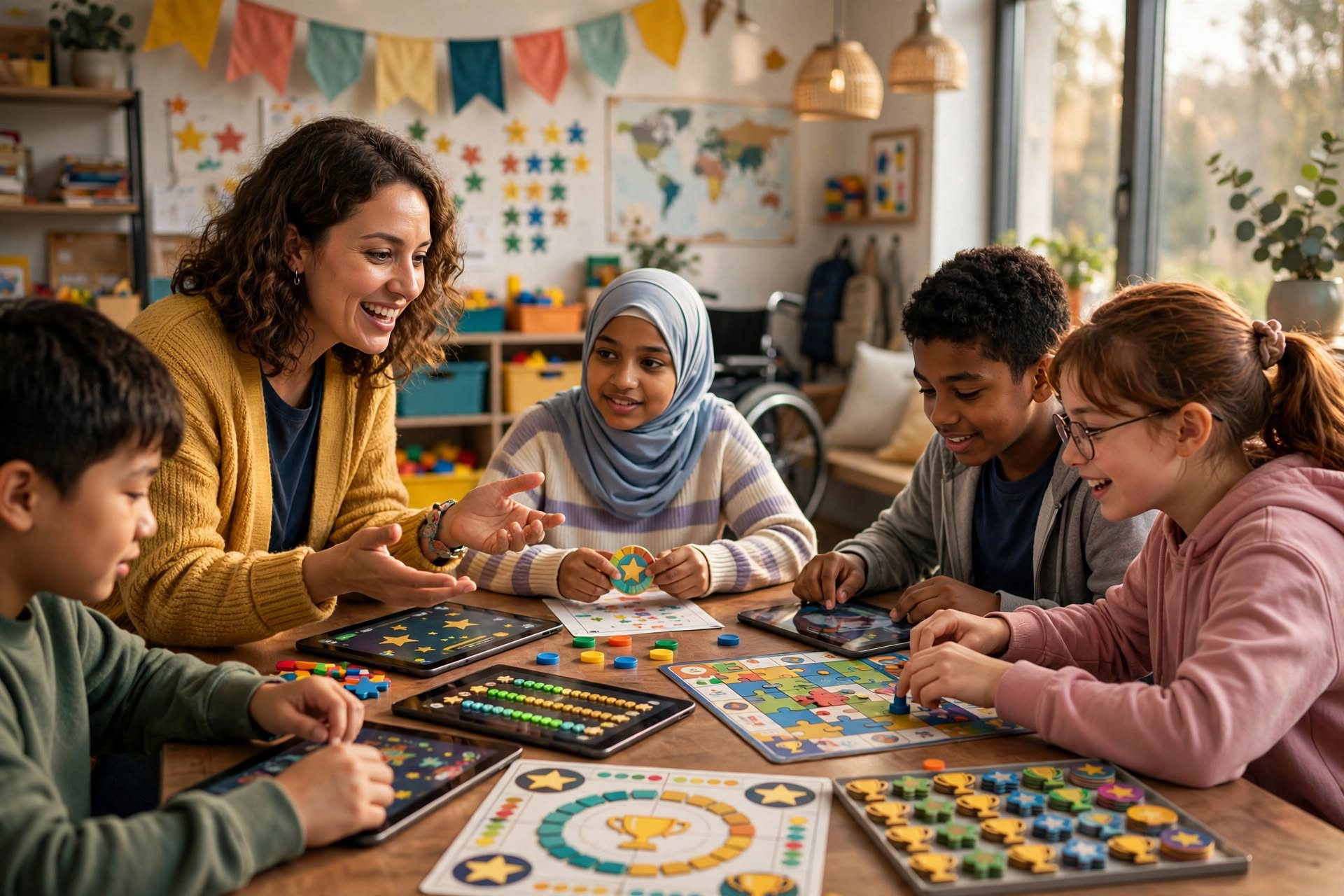
Education is changing as teachers and institutions explore new ways to make learning more engaging, interactive, and effective. Traditional teaching methods remain important, but students increasingly benefit from activities that encourage participation, creativity, collaboration, and problem-solving. One approach gaining attention is gamification, which introduces game-like elements into educational activities to motivate students and improve their learning experiences.
The rise of gamification and classroom games reflects a broader shift towards student-centred education. Instead of relying exclusively on lectures, textbooks, and written assignments, educators are incorporating points, challenges, quizzes, rewards, and educational games into their lessons. These methods can make complex subjects easier to explore while encouraging students to take an active role in their education.
As digital learning tools become more accessible, the rise of gamification and classroom games is influencing how teachers design lessons, assess progress, and create supportive classroom environments. In this article, we will explore the sudden rise of gamification and classroom games.
What Is Gamification in Education?
Gamification involves applying game-design elements to activities that are not traditionally games. In education, these elements may include points, levels, badges, progress bars, leaderboards, challenges, and rewards.
For example, a teacher might award points when students complete assignments, solve mathematical problems, or participate in classroom discussions. Students may progress through different levels as they develop new skills and demonstrate their understanding. Classroom games, meanwhile, are structured activities that use gameplay to support learning objectives. Examples include vocabulary competitions, mathematics challenges, educational board games, role-playing exercises, and interactive quizzes.
Understanding this distinction is essential to understanding the rise of gamification and classroom games. Gamification adds game-like features to learning, while classroom games involve activities built around specific rules, challenges, and goals. Both approaches can make lessons more interactive when used thoughtfully.
Why Are Classroom Games Becoming Popular?
One of the main reasons behind the rise of gamification and classroom games is the growing demand for engaging learning experiences. Students often respond positively to activities that allow them to participate, receive feedback, and track their progress. Game-based learning can also introduce variety into lessons. Instead of repeatedly completing similar exercises, students can practise the same skills through puzzles, team challenges, simulations, and quizzes.
Technology has also accelerated this development. Digital platforms allow teachers to create interactive assessments, introduce timed challenges, and provide immediate feedback. However, gamification does not require expensive technology. Paper-based quizzes, classroom competitions, flashcards, and educational board games can offer similar opportunities for participation. The increasing interest in active learning has therefore contributed significantly to the rise of gamification and classroom games across different educational settings.
What Are the Benefits of Gamification in the Classroom?
- Increased Student Engagement
One of the most noticeable benefits associated with the rise of gamification and classroom games is the potential to increase student engagement. Activities involving challenges, teamwork, and immediate feedback can encourage students to participate more actively.
For example, teachers can turn a revision lesson into a quiz competition in which students earn points for correct answers and explanations. This format may make revision more enjoyable while helping teachers identify areas that require additional attention. However, engagement depends on the design of the activity. Games should support learning objectives rather than distract students from them.
- Improved Knowledge Retention
The rise of gamification and classroom games also highlights the importance of practising information in different ways. Educational games can encourage students to retrieve information from memory, apply concepts, and repeat tasks until they improve. A language teacher might use word-matching games to reinforce vocabulary, while a science teacher could organise a challenge requiring students to identify different parts of a cell. Repeated practice, meaningful feedback, and active recall can support learning. Games provide a practical way to incorporate these strategies into classroom routines.
- Development of Problem-Solving Skills
Many educational games require students to analyse information, recognise patterns, test possible solutions, and make decisions. These activities can support critical thinking and problem-solving skills. The rise of gamification and classroom games offers opportunities to introduce realistic scenarios into lessons. For instance, students studying environmental science could work in teams to manage a simulated city while balancing pollution, energy use, and available resources. Such exercises encourage students to apply theoretical knowledge to practical situations rather than simply memorising facts.
- Collaboration and Communication
Team-based games can help students practise communication, cooperation, and shared decision-making. Participants may need to explain their reasoning, listen to different perspectives, and agree on a strategy. These experiences demonstrate how the rise of gamification and classroom games can contribute to social learning alongside academic development. Teachers should ensure that activities distribute responsibilities fairly so that every student has an opportunity to contribute.
What is the Role of Technology in Gamified Learning?
Digital technology is playing an important role in the rise of gamification and classroom games. Educational applications, online quiz platforms, interactive simulations, and learning management systems enable teachers to incorporate game-like features into lessons. Students can receive immediate feedback, monitor their progress, and complete challenges at their own pace. Teachers can also review performance data to identify common mistakes and adjust their teaching strategies.
Artificial intelligence may further support personalised learning by helping educational platforms adapt activities to students’ progress. Nevertheless, AI-powered tools should be evaluated carefully for accuracy, privacy, accessibility, and educational value.
Importantly, the rise of gamification and classroom games should not mean replacing teachers with technology. Teachers remain essential for explaining difficult concepts, guiding discussions, supporting individual needs, and ensuring that games contribute to meaningful learning.
What Are the Challenges and Limitations?
Despite its potential benefits, the rise of gamification and classroom games presents several challenges.
First, excessive competition can discourage students who struggle academically or feel uncomfortable performing in front of their classmates. Public leaderboards may create unnecessary pressure, particularly when students have different abilities or learning needs.
Second, rewards can sometimes become more important than learning itself. If students focus exclusively on earning points or badges, they may lose interest in understanding the subject.
Third, designing effective educational games requires time and planning. Teachers must ensure that activities match curriculum requirements, accommodate different learning styles, and remain accessible to students with disabilities. Digital games can also create inequalities when some students lack reliable internet access or suitable devices.
To address these concerns, educators should balance competition with collaboration, reward progress rather than only perfect performance, and offer both digital and non-digital activities. These considerations are essential to making the rise of gamification and classroom games beneficial for a wider range of learners.
What is the Future of Gamification in Education?
The future of the rise of gamification and classroom games will likely involve more personalised, interactive, and flexible learning experiences. Educational institutions may increasingly combine classroom discussions with digital challenges, simulations, and collaborative projects. Virtual and augmented reality could also provide opportunities to explore historical locations, scientific processes, and complex environments through immersive experiences. However, their effectiveness will depend on affordability, accessibility, and the quality of the learning design. Teachers will remain central to this transformation. Professional development can help educators understand how to create purposeful games, evaluate learning outcomes, and avoid relying on rewards alone.
Ultimately, the rise of gamification and classroom games represents an opportunity to make education more participatory without sacrificing academic standards. The most effective approaches will combine clear learning objectives, thoughtful game design, meaningful feedback, and inclusive teaching practices.
Other than the rise of gamification and classroom games, you can also explore What is the role of technology in early childhood education
Thus, the rise of gamification and classroom games is changing how educators approach student engagement, knowledge retention, collaboration, and problem-solving. By incorporating challenges, quizzes, simulations, and interactive activities, teachers can create lessons that encourage students to participate actively in their learning.
However, games are not a universal solution. Their success depends on careful planning, accessibility, and alignment with educational objectives. When used appropriately, gamification can complement traditional teaching methods and help students develop both academic knowledge and practical skills. As education continues to evolve, the rise of gamification and classroom games may become an increasingly valuable part of creating engaging, inclusive, and effective learning environments.
Frequently Asked Questions (FAQs)
- What is the rise of gamification and classroom games in education?
The rise of gamification and classroom games refers to the growing use of game-like elements and educational activities to improve student engagement, encourage participation, and support learning. Examples include quizzes, points, badges, team challenges, and interactive simulations.
- What are the main benefits of gamification in the classroom?
Gamification can encourage participation, provide immediate feedback, support knowledge retention, and develop problem-solving, teamwork, and communication skills. Its effectiveness depends on how well activities are designed around specific learning objectives.
- What challenges can teachers face when using classroom games?
Teachers may encounter limited resources, unequal access to technology, excessive competition, and difficulties keeping games aligned with curriculum goals. They can address these challenges by using inclusive activities, balancing individual and team tasks, and prioritising learning over rewards.
