

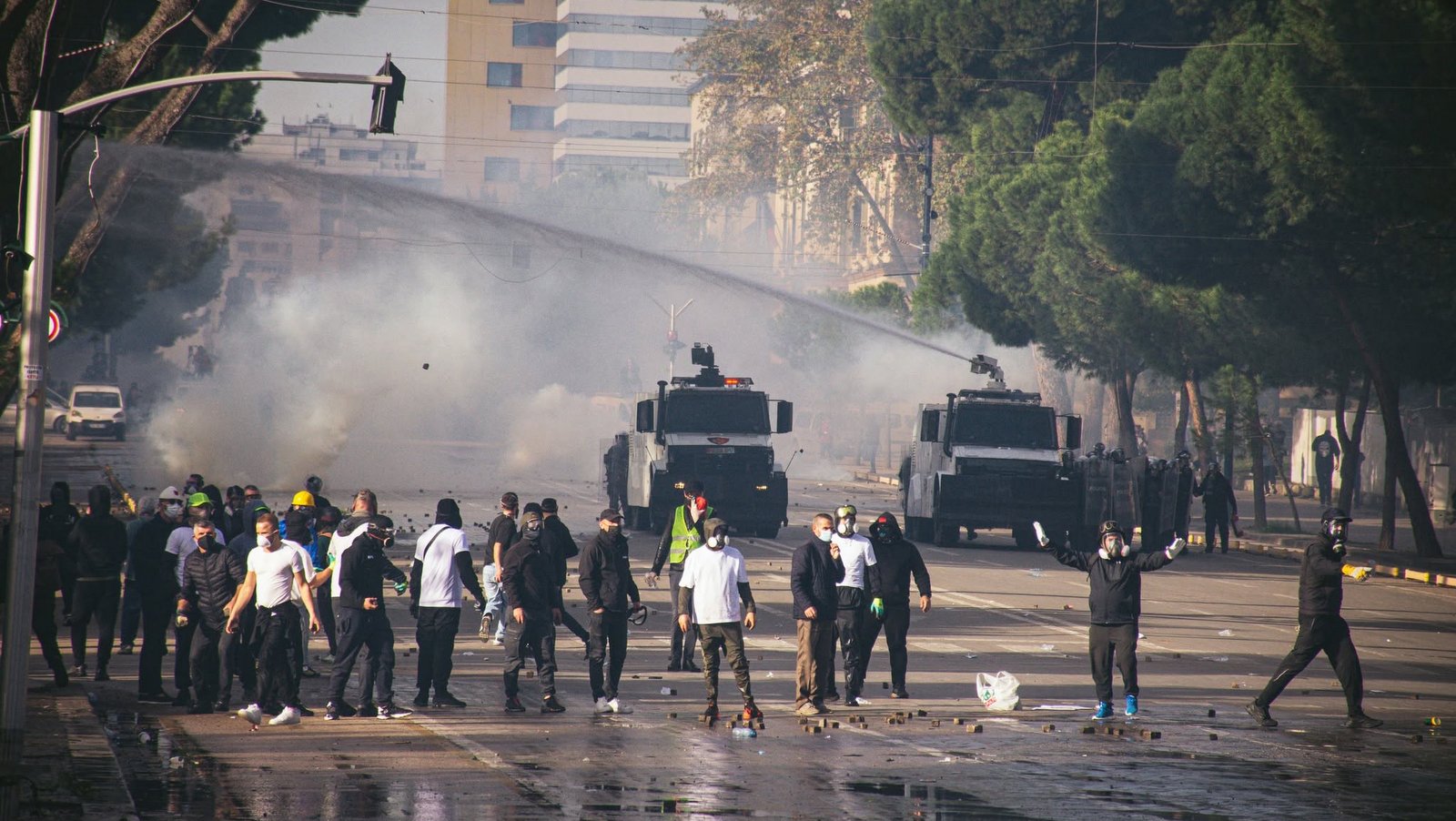
Albanian Prime Minister Edi Rama has renewed his call for dialogue with protesting students as demonstrations against his government entered their 14th day, but the protesters continue to demand his resignation rather than negotiations.
Rama on Monday shared images of chairs placed outside the Prime Minister’s Office in Tirana, presenting them as a renewed invitation for students to sit down and discuss their grievances. His government has maintained that it is willing to address concerns over education, living costs and other issues raised by young people.
The student-led movement, which began on October 13 over university conditions and education-related concerns, has since developed into a broader anti-government protest. Students have called for improved university facilities, more affordable education, greater financial support and better employment prospects, while demands for Rama’s resignation have become central to the demonstrations.
Rama has repeatedly rejected calls to step down, arguing that his government received a mandate through elections and that political change should take place through democratic processes. He has nevertheless said he is prepared to engage directly with students and professors on their concerns.
The protests have also seen increasingly tense confrontations between demonstrators and police. Authorities have used tear gas, water cannon and, during earlier clashes, rubber bullets, while protesters have been accused of throwing stones, petrol bombs and fireworks and damaging public and private property.
The unrest has spread beyond education-related grievances to include accusations of government corruption, unemployment and wider concerns over living conditions. The demonstrations also follow months of protests over a controversial luxury coastal development backed by Jared Kushner, although Reuters reported that it found no evidence of wrongdoing by Kushner.
On October 25, protesters again marched toward Rama’s office and burned the chairs he had placed outside as an invitation to dialogue, underscoring the growing gap between the government’s proposed talks and the protesters’ demands. The government has also announced tougher measures against violent protesters.
Related: Students Lead Historic Political Change in Serbia
Rama has said he will not resign, while protesters maintain that his departure is necessary for resolving the political crisis. With the two sides still divided over the central issue of his resignation, Albania’s student-led protests show no immediate sign of reaching a settlement.
