

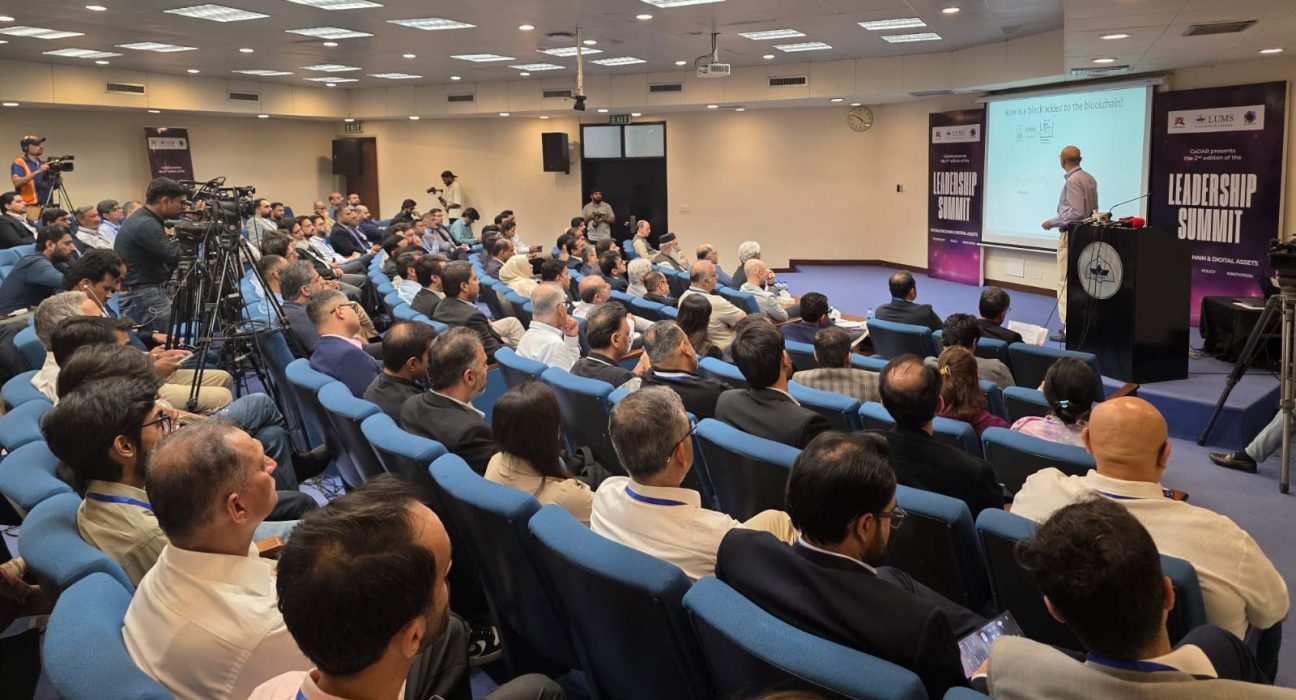
Pakistan is accelerating efforts to introduce a structured regulatory framework for digital assets, with the Lahore University of Management Sciences (LUMS) emerging as a key platform for policy dialogue and academic leadership on the issue. The momentum was evident at the Leadership Summit on Blockchain and Digital Assets, hosted by the university’s Centre for Digital Assets Research (CeDAR), where policymakers, industry leaders and scholars converged to address the country’s rapidly expanding digital finance landscape.
Vice Chancellor Dr Ali Cheema highlighted the importance of academic institutions in shaping forward-looking policy frameworks, noting that universities like LUMS can bridge the gap between research, innovation and governance. The summit underscored how Pakistan’s higher education sector is increasingly contributing to critical debates around blockchain adoption and regulatory design.
Minister of State and Chairman of the Pakistan Virtual Assets Regulatory Authority, Bilal Bin Saqib, said the government is actively developing a regulatory framework as blockchain-based technologies gain traction nationwide. He emphasized that regulation must strike a balance between enabling innovation and ensuring consumer protection, particularly as millions of Pakistanis engage with digital assets through largely unregulated channels.
According to officials, nearly 40 million Pakistanis are already involved in digital asset markets, often through informal platforms operating outside official oversight. This surge presents both an opportunity for financial inclusion and a challenge for regulators seeking to mitigate risks and prevent exploitation. Bilal Bin Saqib stressed the urgency of integrating these users into the formal financial system to enhance transparency and economic stability.
He pointed to Pakistan’s annual remittance inflows, estimated at $38 billion, suggesting that blockchain-based settlement systems could significantly improve efficiency and reduce transaction costs. The country’s growing freelance economy could also benefit from regulatory clarity, enabling Pakistani professionals to compete more effectively in global digital markets.
The proposed regulatory approach is expected to follow a risk-mitigated model, incorporating sandbox environments where new technologies can be tested under supervision. Asset-backed tokenisation has been identified as a priority area, potentially allowing broader participation in sectors such as real estate and financial instruments by lowering entry barriers for small investors.
Speakers at the LUMS-hosted summit warned that delays in regulation could deepen reliance on informal systems, given the scale of existing adoption. They argued that Pakistan now has a strategic opportunity to shape global conversations on digital finance rather than passively adopting external regulatory models.
The role of talent development also emerged as a central theme, with participants highlighting a shortage of skilled professionals in blockchain and digital finance. Collaboration between academia, regulators, financial institutions and technology firms was identified as essential to building capacity and sustaining long-term growth.
Related: LUMS Forum Sparks Debate on Economic Priorities
With sessions on artificial intelligence, blockchain integration and the future of regulated digital finance continuing, LUMS has positioned itself at the forefront of Pakistan’s transition toward a more structured and innovation-driven digital economy.
