

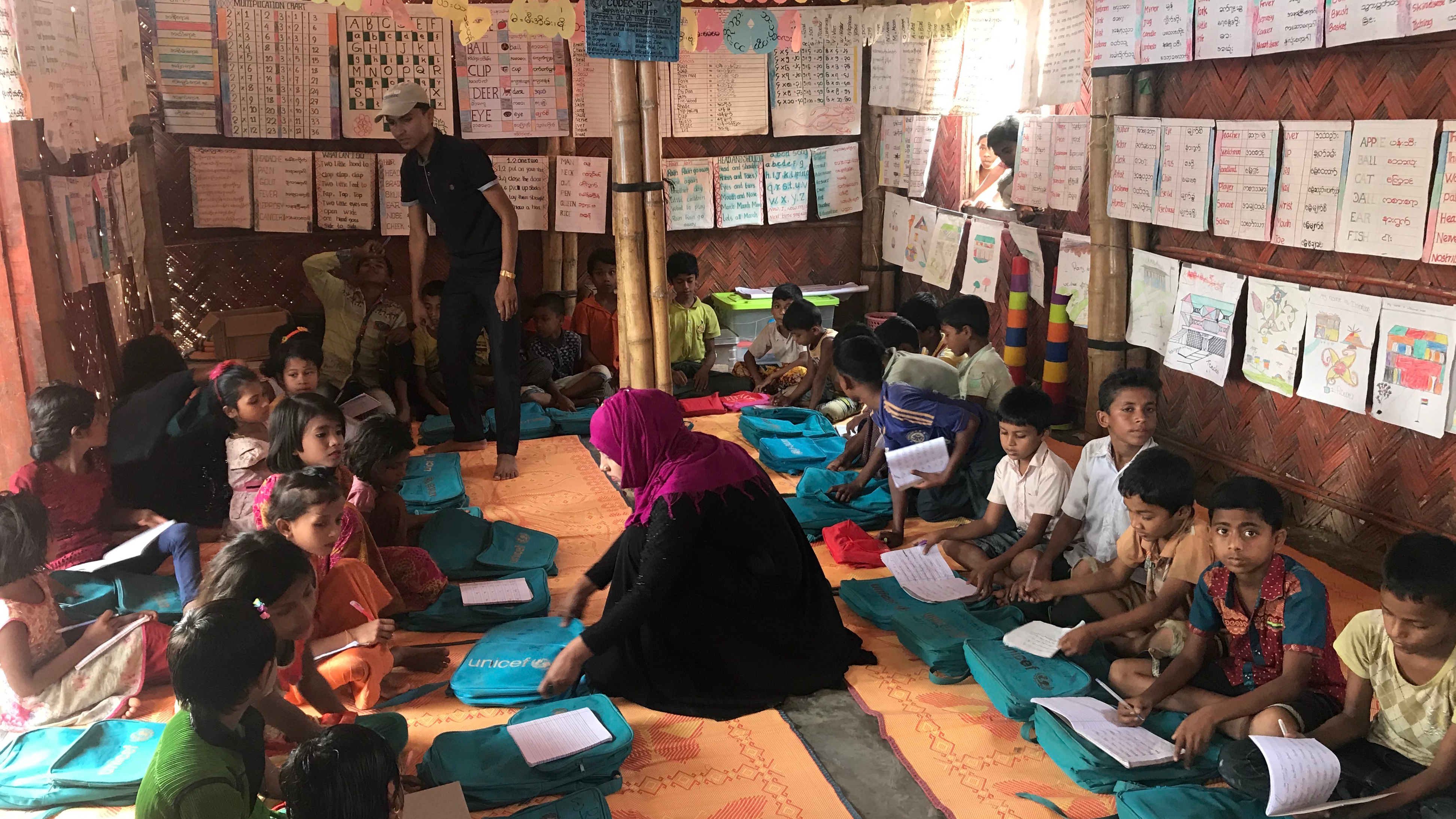
Nearly half a million Rohingya refugee children in Bangladesh are facing an uncertain educational future as a sharp decline in international donor funding threatens to shut down humanitarian learning programmes, Human Rights Watch (HRW) has warned.
In a statement released on November 16, HRW urged international donors to restore education funding and called on the Bangladesh government to remove restrictions preventing refugee communities from establishing and operating their own schools.
According to HRW, approximately 312,000 of the estimated 500,000 school-age Rohingya children living in refugee camps are enrolled in humanitarian education programmes. However, around 188,000 children remain outside these programmes, while an additional 90,000 are expected to need educational support this year because of population growth and new arrivals fleeing violence in Myanmar.
The funding crisis has already disrupted education services. Humanitarian education programmes received only $29 million against a $72 million funding request for 2025, forcing learning centres to close for several months, laying off teachers and reducing teacher training and early childhood education services.
The situation remains critical in 2026. Although humanitarian agencies reduced their education funding request to $53 million, donors had pledged only $36 million by mid-October, leaving a substantial financial gap and putting existing learning centres at risk of further closures.
The consequences are already visible in classrooms across the refugee camps. Teachers have reported shortages of textbooks, notebooks, pens and basic classroom equipment. In some learning centres, three students are sharing a single set of textbooks, while teachers are forced to divide their classes into two daily shifts because of limited resources.
The crisis is particularly concerning for children who have already experienced displacement, violence and prolonged interruptions to their education.
Alongside donor-supported learning centres, Rohingya teachers have established their own community-led education network to address the growing demand for schooling. The Examination Board of Rohingya Refugees, established in 2025, now includes more than 125 community-run schools serving up to 30,000 students. These schools follow the Myanmar curriculum and are working to introduce standardised examinations.
However, the schools face significant legal and financial barriers. They have not received official recognition from the Bangladesh government and cannot directly access foreign funding. Many rely on small contributions from refugee families and use residential shelters as makeshift classrooms, limiting their ability to expand educational services.
HRW also acknowledged some recent progress by Bangladesh’s current government. In October 2026, authorities allowed several dozen Rohingya primary school students to sit an internationally recognised primary examination with support from the UN refugee agency. The government also approved a Rohingya organisation’s plan to establish a primary school for 240 children with a structured 10-subject curriculum.
The Rohingya Centre UK, which is supporting the initiative, plans to provide classes from 9am to 3pm and train teachers from other community-led schools to improve educational standards.
HRW has called on Bangladesh to grant legal recognition to Rohingya-run schools, approve an official curriculum, allow educational certification and create pathways for refugee children to pursue higher education. It has also urged UNICEF and other humanitarian organisations to work directly with community-led education providers.
Related: Malta Students to Join Europe-Wide Youth Strike
The organisation stressed that governments and international donors must treat education as a fundamental right rather than a temporary humanitarian service. Without sustained financial support and policy reforms, hundreds of thousands of Rohingya children risk losing access to education and facing further uncertainty about their future.
