

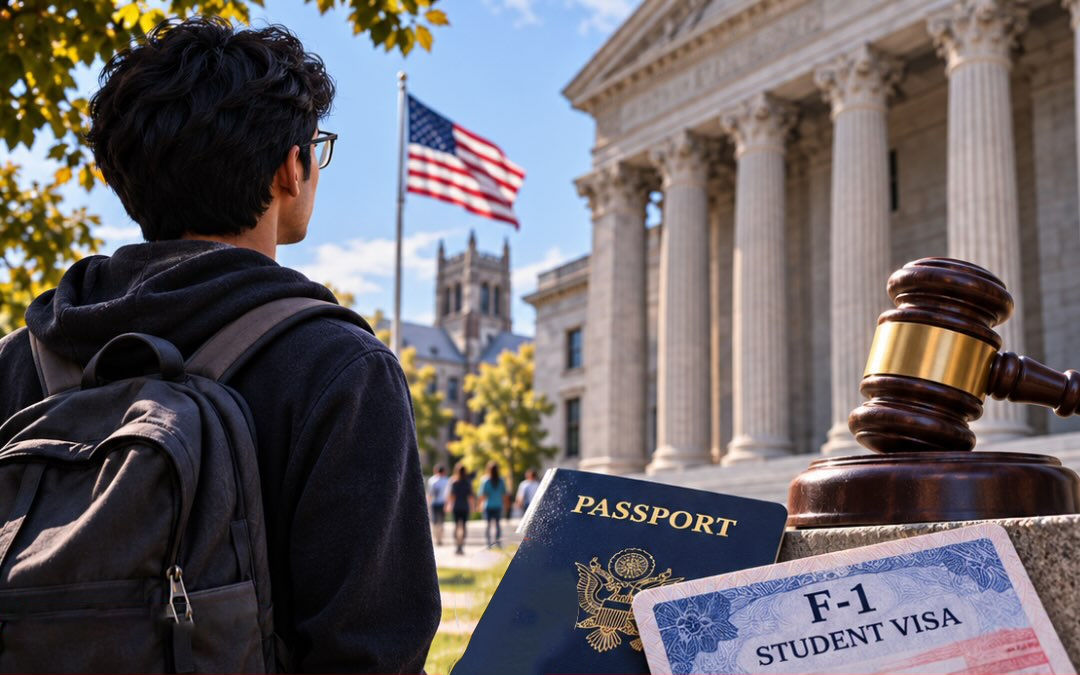
A US federal court has struck down the Trump administration’s plan to impose fixed time limits on foreign students, exchange visitors and international journalists, delivering a major victory for international education groups and thousands of people seeking to study or work in the United States.
US District Judge F. Dennis Saylor IV of the District of Massachusetts issued the final ruling on November 16, 2026, overturning a Department of Homeland Security (DHS) regulation that sought to end the longstanding Duration of Status (D/S) policy.
The regulation, announced in July 2026, proposed limiting international students holding F-1 visas and exchange visitors holding J-1 visas to a maximum stay of four years. Foreign journalists holding I visas would have been restricted to 240 days. Those wishing to remain in the country beyond the prescribed periods would have been required to apply for extensions through US Citizenship and Immigration Services (USCIS).
Under the existing Duration of Status system, international students can remain in the United States throughout their authorised academic programmes, provided they continue to meet visa requirements. The same framework allows exchange visitors to stay for the duration of their approved programmes.
In his decision, Judge Saylor ruled that the DHS regulation was arbitrary and capricious, an abuse of discretion and inconsistent with the law under the Administrative Procedure Act. He concluded that the department had failed to adequately assess the financial and administrative consequences of the proposed restrictions or demonstrate that the changes were necessary to address concerns about visa fraud and national security.
The court also criticised the administration for failing to consider less restrictive alternatives, including improvements to the existing Student and Exchange Visitor Information System (SEVIS). The judge found that the proposed system would have created substantial costs and unnecessary administrative burdens for universities, students and researchers without adequately demonstrating corresponding benefits.
Another major concern was the potential impact on students’ academic freedom. The proposed regulation would have restricted international students’ ability to change their fields of study, transfer between institutions or pursue additional academic programmes. The judge questioned whether DHS had the legal authority to impose such restrictions, noting that the law did not grant the department broad powers to undermine the F-1 student visa programme.
The ruling followed an earlier court intervention on September 14, 2026, when Judge Saylor temporarily blocked the regulation from taking effect. The final judgment now vacates the entire regulation, preserving the existing Duration of Status framework nationwide.
The decision has been welcomed by higher education organisations, including NAFSA: Association of International Educators and the Presidents’ Alliance on Higher Education and Immigration, which were among the organisations that challenged the government’s policy alongside labour unions and other education groups.
The ruling means international students can continue their studies under the existing immigration framework without facing the proposed four-year admission limit or the new extension-of-stay requirements. It also protects exchange visitors and foreign journalists from the proposed restrictions.
Related: Rohingya Schools Struggle as Funding Dries Up
However, the Trump administration retains the option of appealing the final judgment. For now, the court’s decision preserves the existing arrangements, offering significant relief to international students and universities concerned about additional immigration hurdles and uncertainty surrounding academic programmes.
