

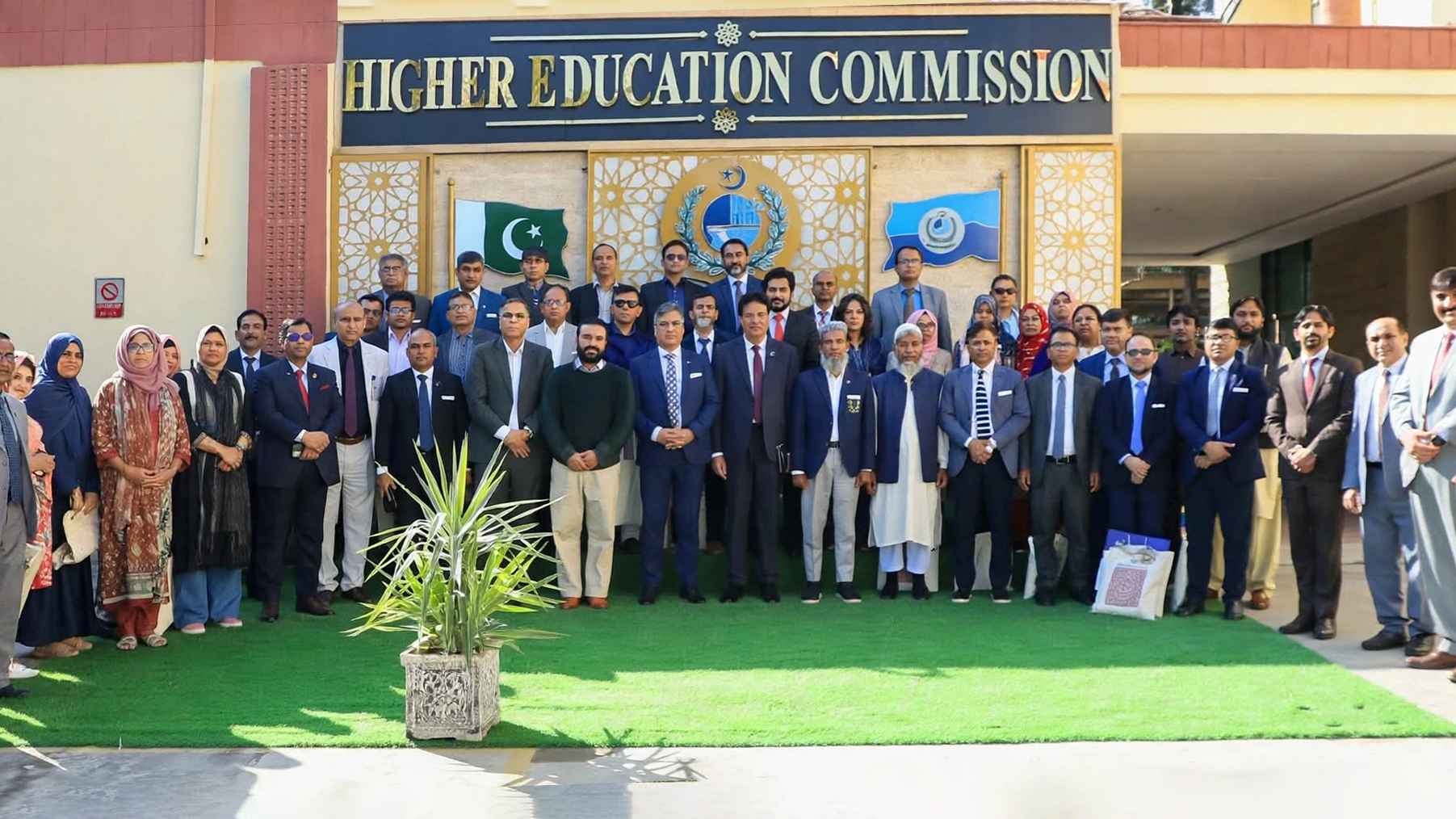
Pakistan has hosted a delegation of 35 senior civil servants from Bangladesh at the Higher Education Commission (HEC) as part of a two-week Executive Leadership Training Programme aimed at promoting professional development, institutional cooperation and closer bilateral ties between the two countries.
The programme is sponsored by HEC under the Pakistan-Bangladesh Knowledge Corridor initiative, providing Bangladeshi officials an opportunity to learn about Pakistan’s higher education system, governance structures, public administration and institutional leadership.
HEC Executive Director Prof Dr Zia Ul Haq, accompanied by senior management, welcomed the delegation during its visit to the commission. The officials were briefed on HEC’s mandate, key functions, policy priorities and major initiatives aimed at strengthening higher education, research, institutional development and academic standards in Pakistan.
The training programme includes specialised modules on governance, public administration and executive leadership, designed to enhance the professional capacities of senior government officials. Participants are also undertaking exposure visits to various government ministries and public sector institutions to gain insights into administrative practices, institutional operations and policy implementation.
The initiative is part of the broader Pakistan-Bangladesh Knowledge Corridor, which seeks to expand cooperation in higher education, research, academic exchange and professional capacity-building. The programme also includes fully funded scholarships for Bangladeshi students at Pakistani universities and efforts to strengthen institutional partnerships between the two countries.
Related: HEC Honours Young Scientists for 14 International Awards
The engagement reflects growing efforts by Pakistan and Bangladesh to expand cooperation beyond diplomatic channels through educational partnerships, professional exchanges and institutional learning. Both sides expressed confidence that such initiatives would help strengthen bilateral relations, encourage knowledge-sharing and promote lasting people-to-people connections between the two countries.
