

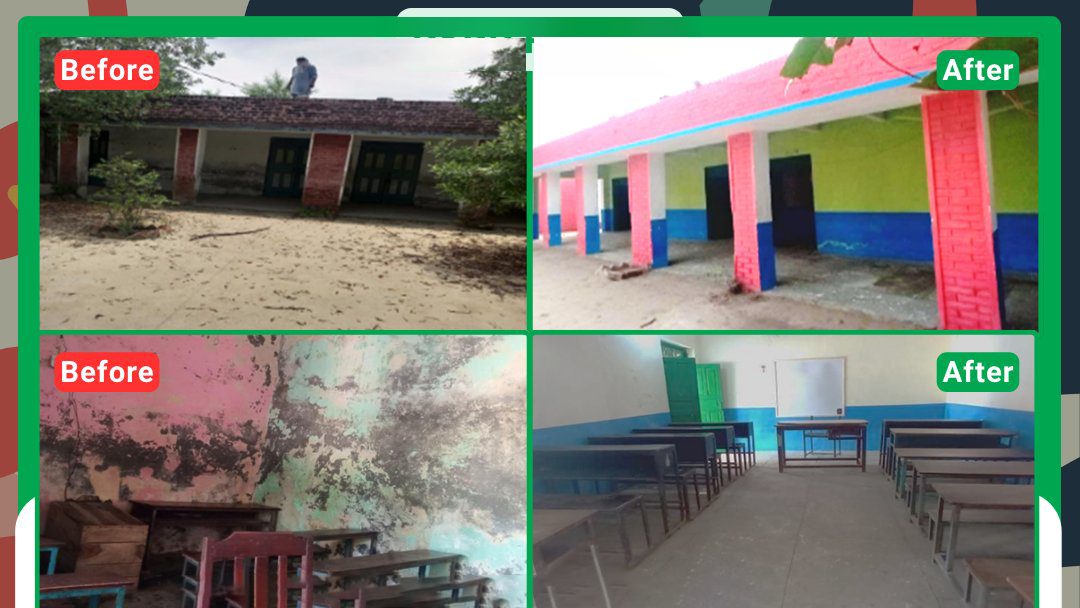
Punjab’s provincial government has accelerated its shift toward public-private partnerships in education, broadening the scope of both the Public Schools Reorganisation Programme and the Punjab Education Foundation (PEF) under Chief Minister Maryam Nawaz Sharif. The move signals a structural rethinking of how public education is delivered in the country’s most populous province.
Under the PSRP framework, government schools identified as underperforming are transferred to private management partners. While ownership of school infrastructure remains with the state, day-to-day operations, staffing decisions, and performance management are handled by private entities. Proponents argue this arrangement injects efficiency, accountability, and innovation into a system long criticized for bureaucratic inertia. Opponents, however, see it as a gradual outsourcing of a constitutional responsibility.
Parallel to this, the PEF continues to expand its reach by subsidizing education in low-cost private schools catering to disadvantaged communities. The model ties public funding to performance benchmarks, largely measured through standardized testing. Officials describe this as a results-driven approach designed to reward high-performing schools and phase out ineffective ones.
The current administration has announced plans to scale up both initiatives, with an emphasis on stricter oversight mechanisms and wider geographic coverage across urban and rural districts. Authorities cite improvements in board examination outcomes in certain government schools as evidence that performance-linked reforms are beginning to deliver measurable gains.
Critics remain unconvinced, arguing that the policy framework risks reducing education to test scores while neglecting broader developmental objectives. Concerns have been raised about gaps in teacher training, curriculum depth, student mental health support, and the precarious nature of teacher employment under private operators. Education analysts warn that an excessive focus on standardized assessments may narrow learning outcomes and undermine holistic education.
The debate unfolding in Punjab mirrors a broader global discourse on market-oriented education reforms. Experiences across South Asia suggest that while such models can improve certain quantifiable indicators, they often raise persistent questions around equity, access, and long-term sustainability.
Related: Punjab Rolls Out Major School Reforms for 2026-27
With policy decisions being shaped in Lahore, the implications are far-reaching. Punjab’s education system serves millions of students and employs one of the largest teaching workforces in the region, meaning the success or failure of these reforms could significantly influence the trajectory of public education across Pakistan.
