

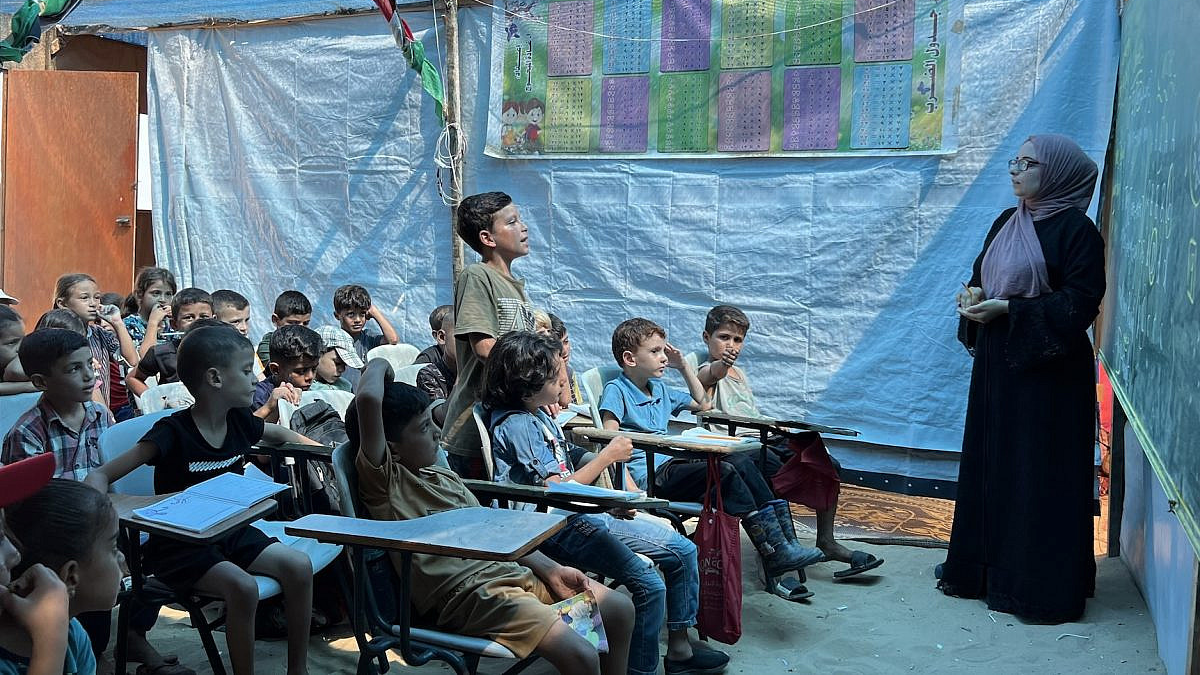
After nearly three years of war and repeated disruption, children in Gaza are returning to learning with severe gaps in reading, writing and mathematics, while damaged schools, displacement, trauma and difficult living conditions continue to threaten their education.
Education experts warn that recovery will require more than simply reopening classrooms. Children need to be assessed individually, provided with remedial instruction and supported psychologically so they can rebuild foundational skills before moving through higher grades.
A UNICEF survey conducted between December 2025 and January 2026 found that 68% of children aged five to 11 had participated in educational activities for three months or less since the war began in October 2023. Experts say the figure demonstrates the scale of disruption, although it does not by itself measure how much learning each child has lost.
The damage to Gaza’s education infrastructure has made the recovery even more difficult. UNICEF reported that nearly 98% of school buildings have been damaged or destroyed, while Save the Children said in September that 97.5% of school buildings had been damaged. More than 93% of schools require major rehabilitation or full reconstruction, according to UNICEF figures cited by Save the Children.
Emergency learning programmes are nevertheless expanding. UNICEF said it was bringing around 350,000 children back to learning in more than 200 centres during the current school year, while more than 500,000 of Gaza’s roughly 700,000 school-age children were attending temporary learning spaces this fall. About 200,000 remained without structured learning.
The return to education remains far from normal. Many children receive fewer instructional hours, study in temporary facilities and face shortages of learning materials, overcrowding and inadequate water and sanitation. Displacement and unexploded remnants of war also continue to restrict access.
The psychological impact is another major obstacle. Children have experienced bereavement, displacement, loss of homes and prolonged insecurity, while parents have reported sleep problems, social withdrawal and behavioural changes. Education specialists therefore say mental health and psychosocial support must be integrated with academic recovery rather than treated as a separate issue. english.aawsat.com
There is evidence that targeted remedial education can produce significant gains. A UNICEF-supported programme completed by 5,000 children in grades one through four in Gaza in 2021 raised average mathematics test scores from 37% to 95.5%. Experts caution, however, that the programme cannot be used to predict recovery today because the current crisis involves vastly greater destruction, displacement, bereavement and deprivation.
UNRWA education officials have warned that rebuilding Gaza’s education system could take up to seven years. Research by the University of Cambridge, the Centre for Lebanese Studies and UNRWA had previously projected that cumulative disruptions could leave some children as much as five years behind academically.
Experts say the priority should not be rushing children through damaged curricula or promoting them simply to the next grade. The focus must be on rebuilding literacy, numeracy and other foundational skills, restoring children’s connection with teachers and classmates, and creating safe and consistent learning environments.
Related: West Bank Education Hit as Israeli Settler Attacks Surge
For Gaza’s children, recovering lost education will therefore be a long-term process. Returning to a classroom is only the first step; rebuilding the knowledge, confidence and stability lost during years of war could take years more.
