

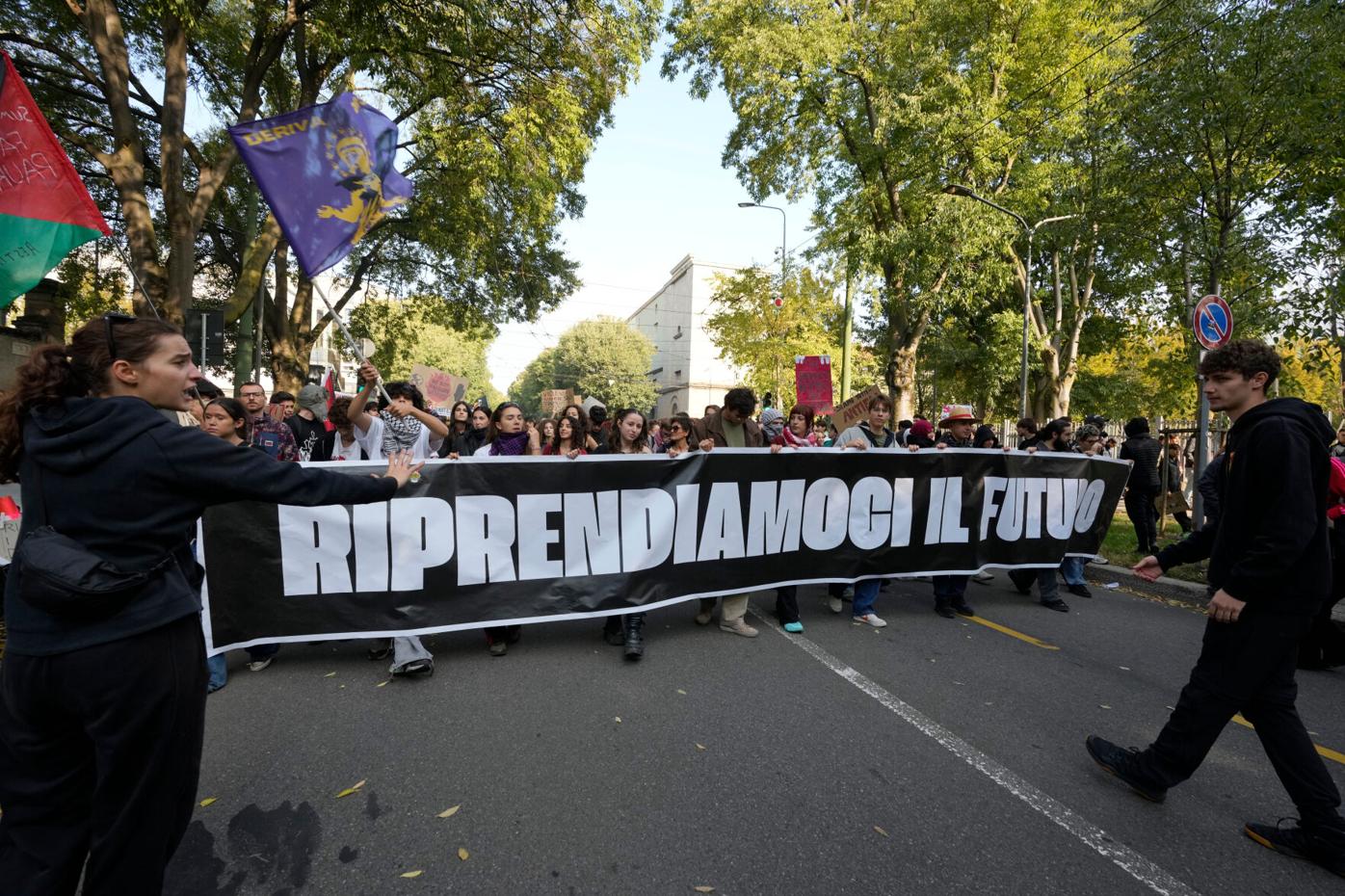
Thousands of students, workers and their supporters took to the streets across Italy on Friday as a nationwide strike and demonstrations brought together demands for better-funded schools, higher wages, affordable living costs and opposition to increased military spending.
Large demonstrations were reported in Rome, Milan, Naples, Turin, Venice, Palermo and other cities, with high-school and university students joining workers in protests organised around the October 30 general strike. Authorities deployed a heavy police presence amid concerns that recent unrest could lead to further clashes.
Student groups said they were protesting deteriorating school infrastructure, insufficient education funding, rising rents and living expenses, as well as what they described as excessive government spending on rearmament. Students have staged protests, school occupations and tent camps in recent weeks, reflecting a broader wave of youth demonstrations spreading across several European countries.
In Turin, more than 1,000 high-school and university students marched alongside teachers and other education staff before joining workers taking part in the general strike. Protesters carried messages calling for unity between students and workers and demanding that public money be directed toward schools rather than war.
In Palermo, more than 2,000 students, workers and grassroots union supporters joined a march against the rising cost of living, war and rearmament. Education groups also raised concerns over the condition of school buildings and called for increased funding for public health services.
The demonstrations were organised amid growing pressure over Italy’s cost-of-living crisis. Unions have demanded wage increases that keep pace with inflation, lower costs for essential goods, utilities and housing, and stronger funding for education, healthcare and other public services.
The protests follow several weeks of demonstrations across Italy. Some earlier rallies were peaceful, while violence, clashes with police, vandalism and looting were reported during unrest in Milan and other cities, prompting authorities to strengthen security measures ahead of Friday’s mobilisation.
The Italian protests are also part of a wider wave of youth and social mobilisation across Europe, with students and workers in countries including France, Belgium, Albania, Spain, Greece and Portugal raising concerns over education, housing, living costs and economic insecurity.
Related: Australia Adds 23000 University Places for 2027
Friday’s mobilisation could further intensify pressure on Prime Minister Giorgia Meloni‘s government as students and workers increasingly connect education funding, wages, housing and public services with broader concerns over government spending priorities.
