

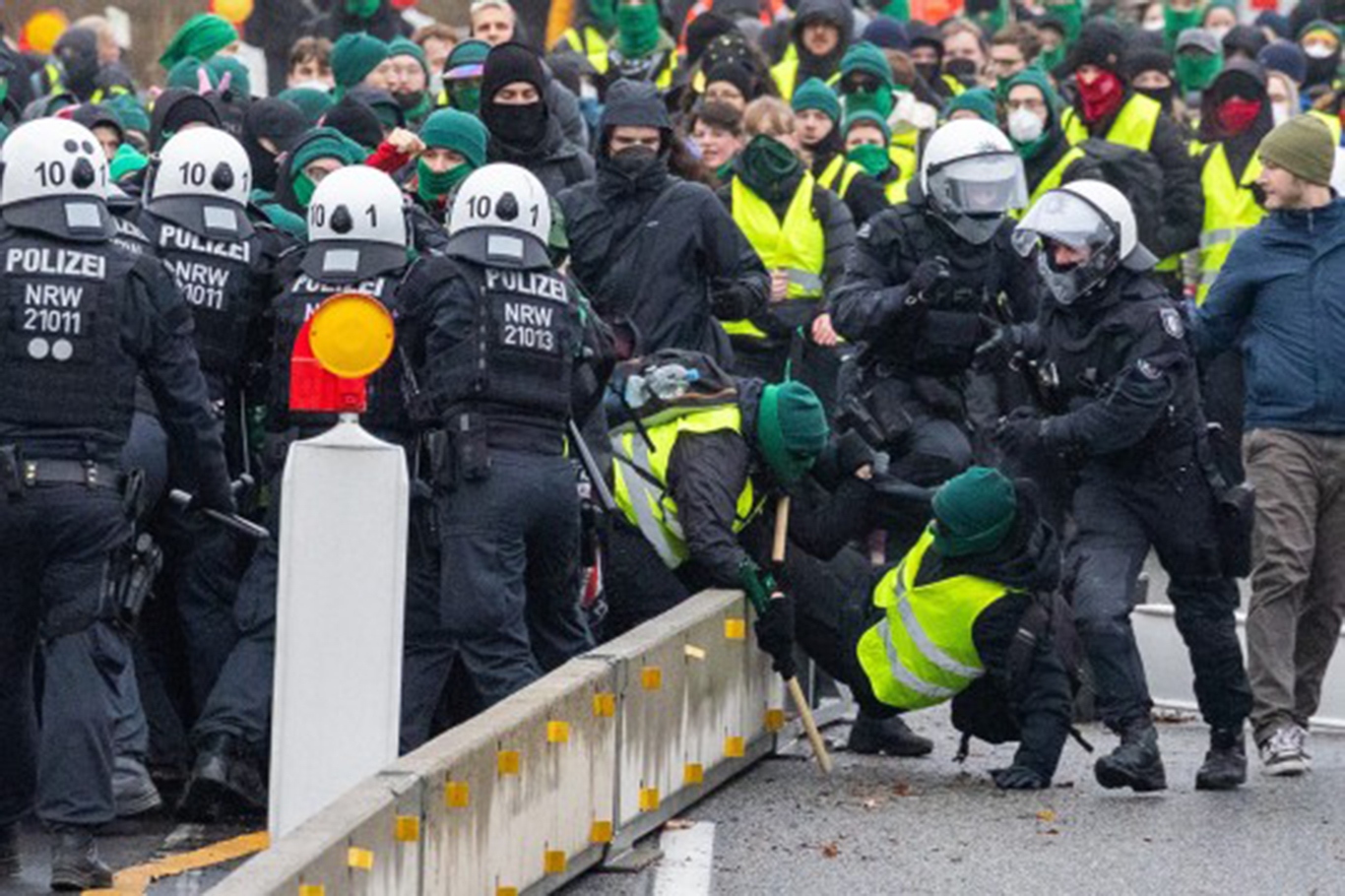
Tens of thousands of students and young people are taking part in demonstrations across more than 30 German cities on Saturday, with demands for better education and greater investment in public services at the centre of the nationwide mobilisation. Organisers expect more than 160,000 people to participate in rallies being held across 34 cities.
The youth-led movement “Gen Z regelt” is calling for stronger investment in education, healthcare and social services, while also opposing government plans to revive compulsory military service and criticising rising living costs. The demonstrations are being held in major cities including Berlin, Hamburg, Munich, Frankfurt and Cologne.
For students, education is one of the most immediate concerns. Protesters have highlighted overcrowded classrooms, teacher shortages, deteriorating school buildings and inadequate facilities, arguing that years of underinvestment are directly affecting their education and future prospects.
A 17-year-old student involved in the mobilisation told Germany’s Tagesschau that students were sitting in overcrowded classrooms, facing teacher shortages and studying in buildings that urgently needed renovation. She said some students were still being taught in temporary containers because school buildings had not been properly maintained.
Education researchers have also linked the growing frustration among young Germans to deteriorating academic outcomes. Recent PISA results showed another decline in the performance of German 15-year-olds in mathematics and reading, with around one in three students failing to reach the minimum proficiency level in those subjects.
The protesters are also demanding greater public investment in education. Data cited by Tagesschau show that education accounts for about 9.2 percent of total public expenditure in Germany, compared with 9.6 percent across the European Union and 12.4 percent in Nordic countries.
The education concerns extend beyond schools to higher education. Protest organisers have cited poor university facilities and insufficient public investment as part of their wider concerns about the future facing young people in Germany. Reuters reported that the movement is demanding greater investment in education alongside lower living costs and an end to compulsory military service.
Mehr News also reported that tens of thousands of students were demonstrating in various German cities against government policies, including cuts to social spending and plans to revive mandatory military service.
The movement describes itself as an alliance campaigning for education, healthcare, climate action and an affordable life, while opposing austerity and conscription. Its organisers have called for peaceful demonstrations and say young people want greater influence over decisions affecting their future.
The Federal Students’ Committee has distanced itself from the “Gen Z regelt” campaign because of concerns about its organisational structure, but has acknowledged the legitimacy of students’ concerns about education and their future. The organisation plans to hold a separate student protest in November.
Related: Students and Workers Flood the Streets in Italy
With demonstrations taking place across dozens of German cities, education has become a key part of a broader generational debate over public spending, living costs and young people’s future. For the students on the streets, the message is increasingly focused on whether Germany is investing enough in the schools, universities and public services that will shape the next generation.
